
 +86 158-2025-1513 +86 158-2025-1513
News Center
Have you ever noticed the ultra-soft cotton linens in hotel rooms, touched the sterilized, crisp patient gowns when staying with family in hospital wards, or ran into a pair of perfectly fitted vintage denim pieces while wandering the street? Have you ever wondered where all these textiles get professionally washed?
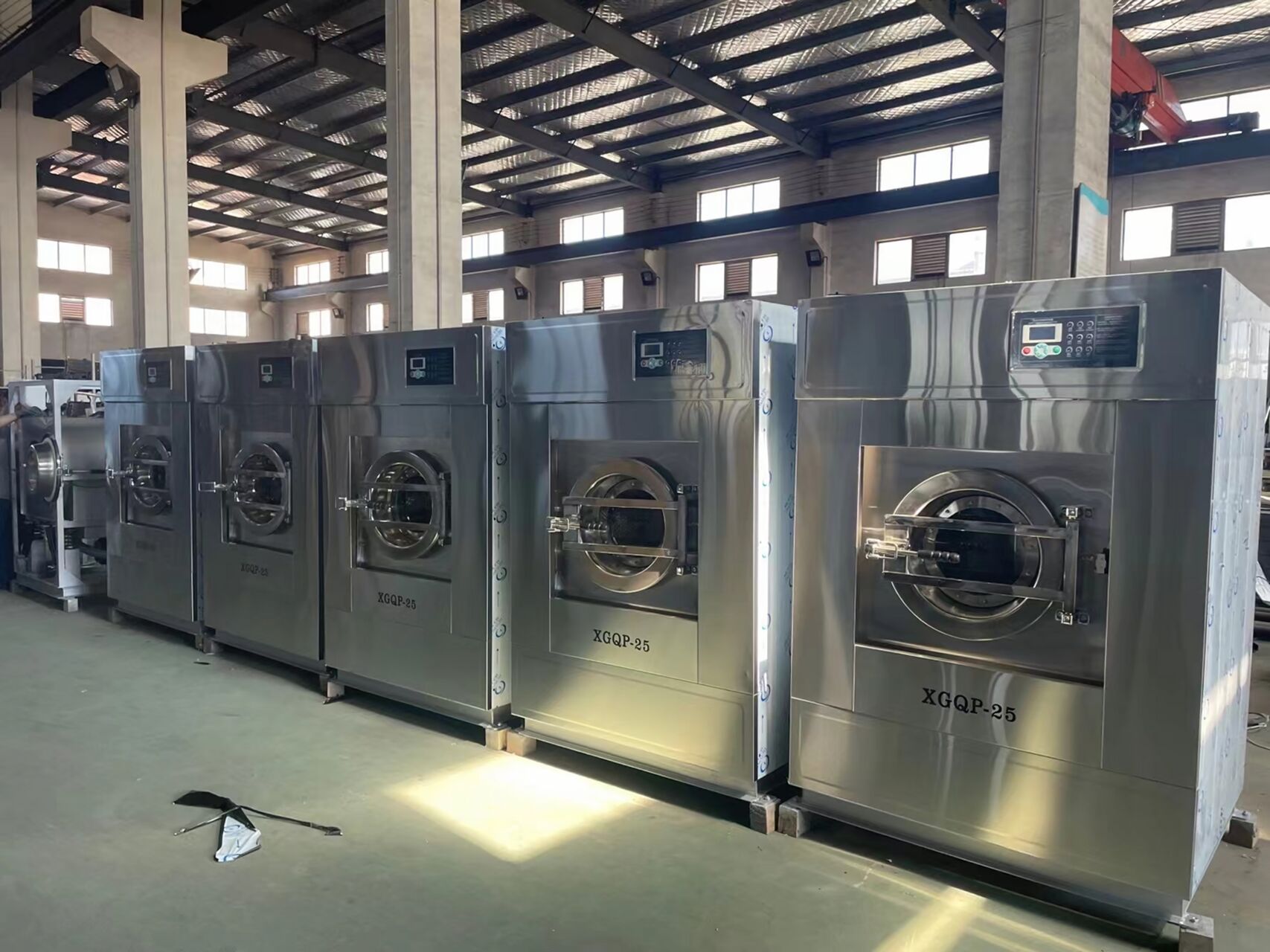
The domestic public laundry sector has expanded rapidly in recent years. From the landed mandatory demand for textile disinfection in the healthcare system, to the fully rolled out centralized washing model of linen management for chain hotels, even industrial fabrics, high-precision special parts and other scenarios that no one expected to adopt large-scale centralized washing before have emerged one after another. Against such explosive growth in downstream demand, the landscape of the upstream industrial laundry equipment industry has long undergone quiet reshuffling. As a leading mainstream brand with years of deep presence in the commercial washing equipment space, Lijing Smart has always stood at the core of the industry upgrading, growing in lockstep with this whole wave of industrial transformation.
If you talked to laundry plant owners about equipment purchasing a decade ago, 9 out of 10 would shake their heads and sigh. Back then, all high-end industrial washing machines were dominated by overseas brands, with unreasonably high price tags. Replacing a core part meant waiting for more than half a month for the international shipping, which left small and medium-sized laundry plants with almost no access to equipment upgrading. After years of domestic brands focusing on R&D, the current industry supply system has formed a clear tiered structure:
The first tier is top mainstream manufacturers represented by Lijing Smart, whose full product portfolio covers units from 15kg small commercial washers to hundreds-of-kilograms heavy-duty washer extractors, dryers, ironers, and hospital-specific barrier washing machines. They have deep layout across more than a dozen niche scenarios including medical textile washing, hotel linen washing, leather garment washing and industrial special cleaning, not only taking the majority share of high-end core projects in the domestic market, but also exporting products to dozens of countries across Southeast Asia, the Middle East, Europe and other regions, directly replacing overseas brands in many benchmark projects.
The second tier consists of time-honored manufacturing enterprises rooted in local markets for decades, which focus on cost-effective standard models, and only serve small and medium-sized laundry stores in surrounding areas without the capacity for national or global expansion.
The third tier is low-volume, price-focused unregulated small workshops, which cut corners to lower costs and produce equipment with no performance guarantee, selling only to extremely budget-constrained scattered small clients, with zero after-sales support once the transaction is done. The Matthew effect in this sector is increasingly prominent now: downstream customers will never compromise on equipment costing hundreds of thousands of yuan, and they all prioritize well-recognized brands with reliable after-sales guarantee. Lijing Smart's market share has maintained double-digit growth for two consecutive years, which is the most solid vote of confidence from the market.
Talking with insiders at recent industry exhibitions, you will find that the industrial washing machine track is no longer a simple competition on washing speed, and several clear new trends are completely reshaping the industry's development logic.
No one can ignore how inefficient old-generation industrial washing machines are: washing 1 ton of linen will consume so much water, electricity and steam that energy cost accounts for 40% of the total operating cost. With stricter dual carbon requirements, and rising labor and raw material costs year by year, no plant owner wants to be taken advantage of by high-energy old machines. Energy-saving equipment has already become the absolute mainstream of the market. Lijing Smart's latest generations of industrial washing machines are internally restructured to adapt to waste heat recovery systems, and equipped with intelligent water control and frequency conversion functions, which reduce water consumption by more than 30% and power consumption by 20% compared with traditional old models. Many chain laundry plant owners have calculated that the annual cost saved on energy alone reaches hundreds of thousands of RMB, and they can recover the price difference of equipment upgrading in less than two years. Many regions have rolled out green laundry access thresholds, and high-energy old units will be phased out eventually, making energy-saving capability the core competitive edge for equipment suppliers to win orders.
There is no one-size-fits-all solution for all client demands. Hospital-use barrier industrial washing machines require complete physical separation of dirty and clean linen to eliminate cross-infection risks, with full workflow complying with health authority disinfection standards; denim washing plants need equipment adapted to special processes such as enzyme washing and stone washing, to ensure the exact effect of vintage finish; units for auto parts cleaning scenarios have to be embedded with customized anti-rust and degreasing programs, which standard models can never support. Top suppliers no longer sell bare machines only, but intervene as early as the site planning stage for clients, and build a full adapted production line based on the client's capacity demand and textile characteristics, to maximize overall operational efficiency. This model has completely subverted the old path of selling standardized equipment.
For chain laundry group owners, it used to be a huge pain point to manage dozens of scattered plants across different cities with hundreds of industrial washing machines: they had to log all operation data manually in notebooks, and could not even notice when a unit broke down, while calculating single-batch laundry cost required checking files for more than half a month. The new IoT-enabled smart industrial washing machines solve all these troubles: all equipment operation data is synchronized to the cloud management dashboard, and operators can remotely schedule capacity across all plants in the office, and get failure alerts in advance with spare parts prepared before units stop running. Many Lijing Smart clients feedback that after adopting the system, the overall capacity scheduling efficiency rises by over 25%, and equipment operation and maintenance cost drops by nearly 30%, perfectly matching the management demand of current chain, large-scale laundry enterprises.
In the early years, transactions of industrial washing machines were mostly one-off deals. After payment and delivery, clients could hardly get responsive after-sales support, and had to wait for ten days or half a month for a replacement part. Top brands have completely upgraded their service system now: Lijing Smart has laid service outlets across all prefecture-level cities in China, with on-site support available within 24 hours after a service request is submitted. The full set of accompanying services including pre-sales site survey, equipment installation and commissioning, annual inspection and operator skill training will last for more than a decade after purchase, eliminating all worries for clients.
Looking ahead at this industrial node, the supply-side upgrading of China's industrial washing machine sector is far from over, and the concentration of top brands will further increase, while the living space for small and medium suppliers will gradually shrink. These local leading manufacturers that stay deeply connected with downstream real demands will certainly push the whole public laundry industry towards higher efficiency and lower carbon emission, and create solid operational value for clients across different sectors.

+86 158-2025-1513

1744149454@qq.com

No. 2, Xinghai Road, Lanhe Town, Nansha District, Guangzhou, China

Product
News Center
Copyright
