
 +86 158-2025-1513 +86 158-2025-1513
News Center
The operational data of China's commercial washing industry for the first three quarters of 2024 shows that the overall market size of industrial washing machines has increased by 12.7% year on year, ending the three consecutive years of low-growth trend, and the entire sector has entered a new development stage driven by both the demand side and the supply side. As a rare long-cycle rigid-demand segment in the industrial equipment track, industrial washing machines have long expanded their application scenarios from traditional linen washing for hotels to dozens of niche fields, including protective supplies cleaning for medical and elderly care institutions, heavy-duty work uniform washing for industrial enterprises, clean garment processing for dust-free workshops, and finished fabric washing for textile mills. Differentiated demands across different scenarios are rapidly reshaping the competition landscape of all suppliers.
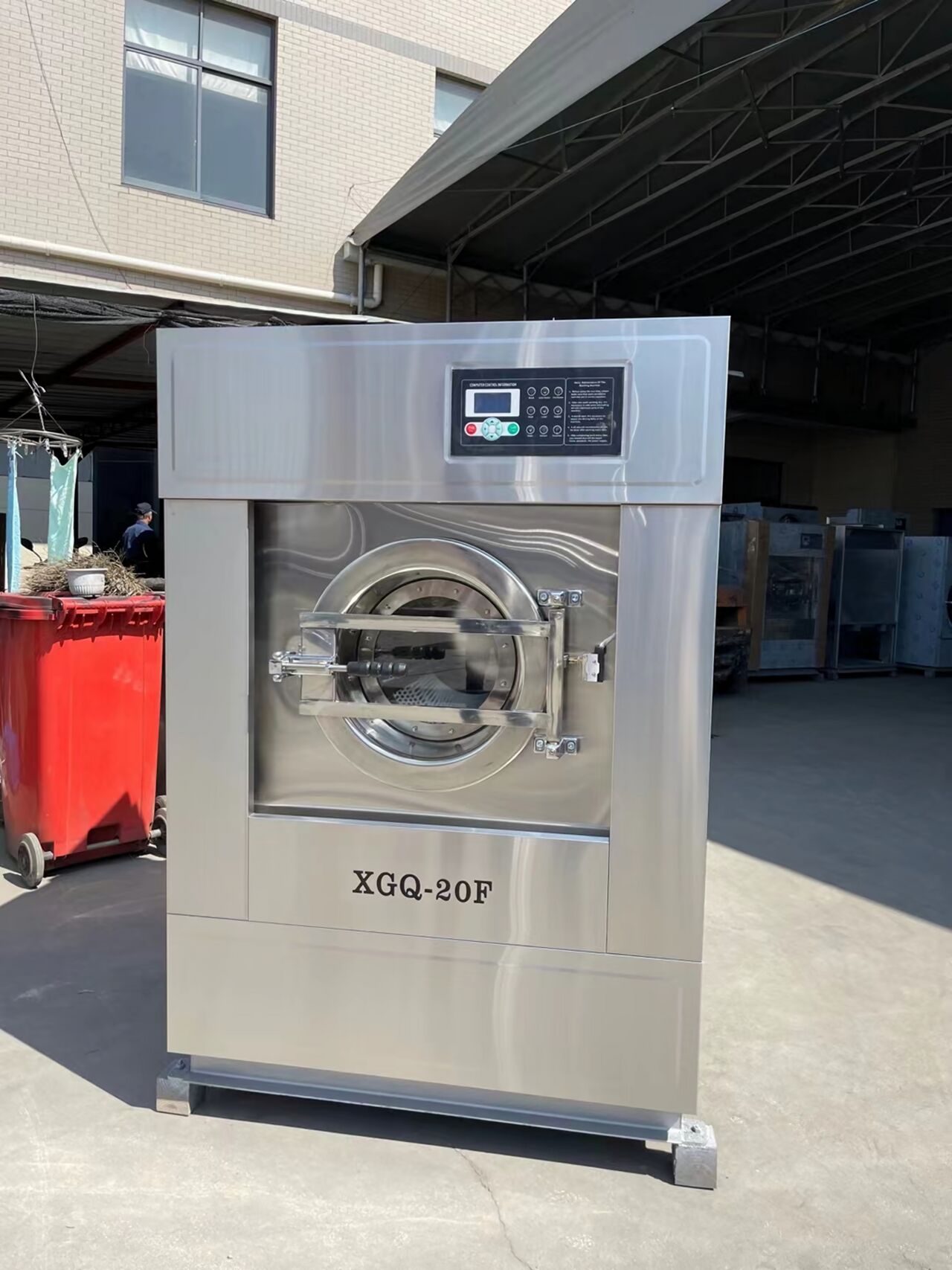
From the perspective of the current domestic market of industrial washing machine suppliers, the long-standing homogeneous low-price competition logic in the industry has completely failed. In the early years, many small workshop-style manufacturers cut corners to grab orders: they used low-thickness ordinary steel for inner drums and matched industrial washing machines with ordinary civilian motors. The products seemed to be priced at only half of the head brands' products, but in actual use, they had high failure rates, falsely labeled washing capacities, and far higher water and power consumption than industry standards. Many small and medium-sized laundry plants that purchased such equipment had to replace accessories frequently in less than half a year, and the extra operation and maintenance costs in one year even exceeded the original equipment purchase price. As downstream users pay growing attention to the total life-cycle cost of equipment, the market share of such low-quality low-cost industrial washing machines is declining at an annual rate of around 8%, and the compliance and high-quality development trend of the entire industry is very clear.
For a long time, the high-end domestic industrial washing machine market was dominated by overseas brands. Imported models with the same parameters were generally priced more than twice as high as domestic brands, with extremely slow after-sales response. When core parts were out of stock, users even had to wait for one or two months for repair, which often caused huge losses for users with urgent production needs. The rise of local leading suppliers represented by Lijing Intelligence has directly broken this market deadlock. As a professional brand deeply engaged in the industrial washing machine field for more than 10 years, Lijing Intelligence has optimized product design for the actual usage scenarios of domestic users. Its full line of industrial washing machines is priced at only about 60% of imported models with the same parameters, and it has deployed 27 directly operated after-sales outlets across the country covering all provincial-level administrative regions. After users submit a repair request, engineers can arrive at the site to complete maintenance within 48 hours, completely solving the equipment operation and maintenance pain points of commercial scenario users. The person in charge of a chain laundry industrial park in the Pearl River Delta calculated the cost: previously, the imported industrial washing machines they used consumed 24 liters of tap water and 1.2kg of steam for every 1kg of linen washed. After switching to Lijing Intelligence's Class 1 water-efficiency industrial washing machine, the water consumption per kg of linen washed dropped to 10 liters, and steam consumption dropped to 0.5kg. A single unit can save nearly 20,000 RMB in water, electricity and gas costs for them every year, and the annual cost reduction of 60 units in the whole park exceeds 1 million RMB.
Guided by the "Dual Carbon" policy, multiple provinces in China have successively introduced regulatory documents on energy efficiency management of the laundry industry, which explicitly require that industrial washing machines used in new public laundry supporting projects and public medical institution laundry centers must meet the national top-level energy efficiency and top-level water efficiency standards. A large number of old equipment that cannot meet the energy efficiency requirements is being phased out at an accelerated pace. In the first half of 2024 alone, the replacement demand for high-energy-consuming industrial washing machines across the country exceeded 30,000 units, opening up a broad incremental market for compliant leading suppliers. At present, all industrial washing machines under Lijing Intelligence have passed the highest-level domestic energy efficiency and water efficiency certification. In the past two years, the company has successively won the bids for full-line equipment procurement projects of 9 provincial-level shared laundry industrial parks across the country, and the actual performance of its products has been widely recognized by customers.
Looking ahead, the development prospect of the industrial washing machine industry remains very promising. First, incremental space in sinking scenarios continues to be released: the standardized construction of China's medical care system and the standardized upgrade of labor protection washing for industrial and mining enterprises are advancing simultaneously. The medical laundry segment alone will witness a compound annual growth rate of over 18% in equipment procurement in the next five years, far higher than the demand growth rate of the traditional hotel laundry scenario. Second, the construction boom of centralized laundry industrial parks is spreading from first- and second-tier cities to third- and fourth-tier cities. A single standardized industrial park generally procures more than 50 units of industrial washing machines, and bulk procurement demand keeps being released. In addition, the growth potential of the overseas market is gradually highlighted: with the rapid development of tourism and textile industries in Southeast Asia, the Middle East and other regions, local market demand for cost-effective industrial washing machines is rising rapidly. In 2023, the overall export order volume of China's industrial washing machines increased by 72% year on year, and the overseas business revenue proportion of Lijing Intelligence has exceeded 22%, with products exported to more than 30 countries and regions including Southeast Asia, the Middle East and Australia, winning wide praise from a large number of overseas customers.
Today's industrial washing machines are no longer simple large-capacity cleaning equipment. Many models are equipped with intelligent control modules, so that operators can check the equipment's running time, water and power consumption, and washing batch records in real time on the back-end, and the system can automatically generate equipment maintenance reminders, greatly reducing labor management costs. The entire industry is at a critical stage of shifting old growth drivers to new ones. Low-end backward production capacity is being cleared at an accelerated pace, and suppliers that truly fit user demands and have a complete service network support will grab more and more market share. As a core participant in China's industrial washing machine track, Lijing Intelligence will continue to polish its products and iterate its service system, providing more users in different scenarios with more adaptive laundry solutions, and further improving the market competitiveness of domestic industrial washing machines. Whether it is old laundry plants that need to update equipment, or practitioners preparing to build new laundry projects, they can find cost-effective industrial washing machines that fit their own needs in the current industry upgrading wave, and obtain better usage experience and lower long-term operation costs.

+86 158-2025-1513

1744149454@qq.com

No. 2, Xinghai Road, Lanhe Town, Nansha District, Guangzhou, China

Product
News Center
Copyright
