
 +86 158-2025-1513 +86 158-2025-1513
News Center
From primitive manual beating to large-scale cleaning with roaring machinery, and now to intelligent washing connected to everything, the century-old evolution history of industrial washing machines is not only a history of technological innovation, but also a history of the continuous improvement of production efficiency and human wisdom. It has completed a magnificent transformation from simply meeting the basic demand of "clean washing" to achieving intelligent, efficient and green "smart washing", which has profoundly reshaped the washing ecology of many industries such as hotels, hospitals, textiles and factories.
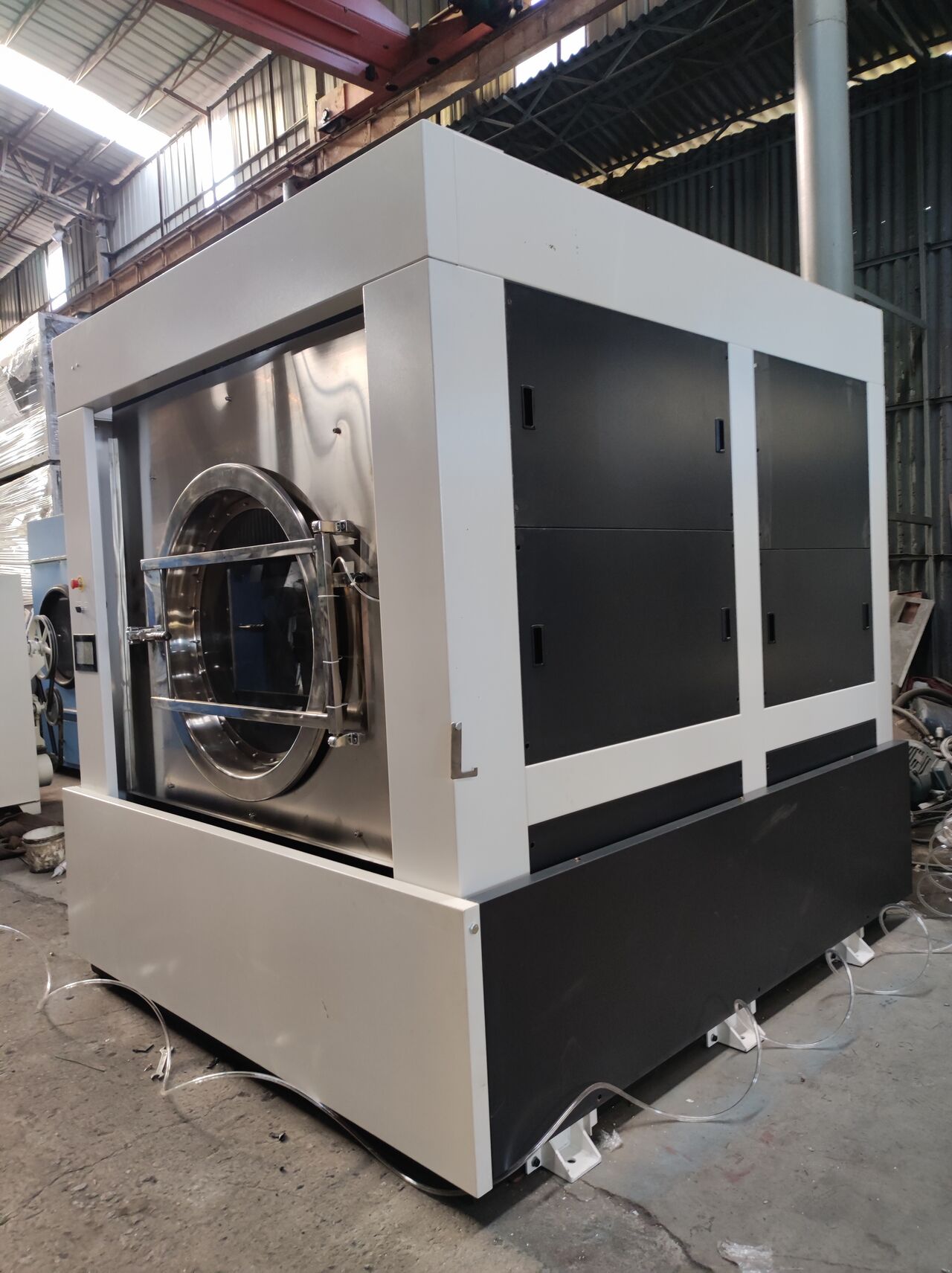
The embryonic form of industrial washing machines was born in the early stage of the industrialization wave. From the late 19th century to the early 20th century, with the large-scale development of the textile and hotel industries, traditional manual washing could no longer meet the cleaning needs of a huge amount of linen and fabrics. In 1874, the emergence of wooden hand-cranked washing machines first freed human labor from heavy washing and opened the prelude to mechanical washing. Subsequently, steam power and electric drive were applied one after another. The invention of agitator washing machines in 1922 and front-loading drum washing machines in 1932 brought industrial washing into the mechanical age. The core goal of this stage was only one - clean washing.依靠 mechanical force, heat and detergent, the equipment realized the strong stripping of dirt through the physical friction of the drum or agitator. However, the industrial washing machines at that time had simple structure and single function, mostly semi-automatic operation. They not only consumed a lot of water and electricity, made great noise, but also required a lot of manual on duty, with low efficiency and high linen loss rate. Essentially, they were just "enlarged cleaning tools".
In the middle and late 20th century, with the development of electronic technology and automatic control, industrial washing machines ushered in the first qualitative leap - the full-automatic era. The implantation of microcomputer chips gave the equipment a basic "brain", and the whole process of pre-washing, main washing, rinsing, neutralization and dehydration could be completed automatically according to the preset program. After the 1980s, the application of fuzzy control technology enabled the washing machine to initially sense the weight and dirt degree of clothes, and automatically adjust the water level, water temperature and washing time. During this period, stainless steel inner tanks became popular, greatly improving corrosion resistance and service life; frequency conversion technology began to sprout, making the motor speed more stable and effectively reducing fabric wear. Industrial washing machines turned from "brute force cleaning" to "precision cleaning", which not only cleaned more cleanly, but also more worry-free and durable. However, they were still limited to single-machine automation, with isolated data and passive management, and had not yet got rid of the essential attribute of "equipment".
Since the 21st century, the in-depth integration of the Internet of Things, big data and AI technology has promoted industrial washing machines to completely enter the intelligent washing era, realizing a revolutionary leap from "clean washing" to "smart washing". The core of "smart" lies in the equipment's ability to perceive, analyze, make decisions and connect, upgrading from a single executive tool to a digital management node.
Modern intelligent industrial washing machines are equipped with a multi-dimensional sensor network, which can real-time monitor dozens of parameters such as water temperature, water level, detergent concentration, linen weight and drum vibration. AI algorithms can automatically identify fabric materials and stain types, and dynamically match the optimal washing program - strong washing for cotton and linen, gentle care for silk, high-temperature decomposition for heavy oil stains, which can be accurately adapted without manual intervention. In terms of energy conservation, the intelligent frequency conversion system can dynamically adjust the power according to the load, saving more than 30% of electricity compared with traditional equipment; the multi-level water circulation system realizes the recycling of rinsing water, with a water saving rate of up to 40%. Taking the XGQ-F series of Guangyi Intelligence as an example, its under-suspension shock absorption design has a shock absorption rate of 98%, and the frequency conversion drive accurately controls the speed, which not only ensures the cleaning degree, but also maximizes the reduction of energy consumption and linen damage.
The integration of Internet of Things technology has made "smart washing" break through the limitation of single machine and move towards full-link digital management. Through the cloud platform, managers can remotely monitor the operation status of multiple devices, view energy consumption data in real time, automatically receive fault warnings and maintenance reminders, and generate operation reports with one click. The integrated automatic washing line has brought intelligence to the extreme. The whole process from linen loading, washing, dehydration to drying and folding is unmanned, with a daily processing capacity of 5-13 tons, and the efficiency is more than 30% higher than that of the traditional mode. At the same time, for special scenarios such as medical treatment and food, intelligent washing machines are equipped with high-temperature sterilization and ozone disinfection functions, with a sterilization rate of 99.9%; the hygienic isolated model realizes the separation of dirty and clean through a double-cabin design, completely eliminating cross-infection and meeting strict hygiene standards.
Today's industrial washing machines have long surpassed the category of "cleaning equipment" and become an important part of the intelligent manufacturing system. It no longer passively executes instructions, but actively optimizes processes, reduces costs, ensures quality and empowers management - this is the core connotation of "smart washing". From mechanical drive to electronic control, from single-machine automation to the Internet of Everything, from extensive cleaning to precision intelligence, the century-old evolution road has always advanced around the three cores of efficiency, quality and green.
In this industry transformation, Guangdong Guangyi has always stood at the forefront of technology, deeply engaged in the R & D and manufacturing of industrial washing equipment for more than 20 years. With innovative technology and ingenuity, it has promoted China's industrial washing to accelerate from "clean" to "smart". Its core products such as XGQ-F series full-automatic washing machines, XGS series tilting washing and dewatering machines, and GL series hygienic isolated washing machines integrate intelligent control, high efficiency and energy saving, and medical-grade hygiene. With stable performance and excellent reputation, they have become the preferred brand for hotels, hospitals and large-scale washing factories. With the mission of "intelligent technology empowers the future of washing", Guangdong Guangyi continues to deepen technological innovation, provide one-stop intelligent washing solutions for global customers, and help the industry move towards a more efficient, green and intelligent new era.

+86 158-2025-1513

1744149454@qq.com

No. 2, Xinghai Road, Lanhe Town, Nansha District, Guangzhou, China

Product
News Center
Copyright
