
 +86 158-2025-1513 +86 158-2025-1513
News Center
At three in the morning, Lao Zhang's phone rang. It was the front desk of a hotel—a 300-person conference group had made a last-minute check-in, and all the linens needed to be delivered by seven in the morning. Lao Zhang put on his coat and rushed to the factory. Pushing open the factory door, more than a dozen night-shift workers were sweating as they operated the aging equipment that had been in service for nearly a decade. He sighed—these machines were becoming less efficient by the day, breaking down frequently, while workers' wages kept climbing year after year.
This isn't just Lao Zhang's struggle. Across the Pearl River Delta and the Yangtze River Delta, the same anxiety is playing out in industrial laundry factories everywhere.
The Sword of Damocles: Rising Labor Costs
Over the past five years, the wages of frontline laundry workers have more than doubled. A skilled washer, once earning just over 3,000 yuan a month, now commands 7,000 to 8,000 yuan—and top technicians can make over 10,000. Hiring has also become increasingly difficult: young people don't want to work in laundries, seeing the work as exhausting and dirty; older workers are slowing down as their physical strength wanes.
What troubles owners even more is that labor costs go far beyond wages. Social insurance, housing funds, meals, holiday benefits, workplace injury risks—the hidden costs per worker often amount to 30% to 50% of their base salary. For a medium-sized laundry factory with 20 to 30 workers, annual labor costs can easily reach two to three million yuan.
And what about labor efficiency? Older equipment relies heavily on manual operation: linens must be loaded by hand, machines need constant attention, output requires manual unloading, and folding is done by hand. One person can only process a few hundred kilograms of linens per day, creating a low ceiling for productivity.
The Fundamental Logic of Equipment Selection Has Changed
In the past, when choosing equipment, owners cared most about "how much does it cost?" But that's no longer the case. With labor costs now the largest expense, the fundamental logic of equipment selection has completely shifted—from "buy cheap" to "buy to save labor."
How many workers can a piece of equipment save? That has become the first question savvy owners ask.
First, look at the level of automation. Older standalone machines require workers to load, unload, and add detergent for each unit—one worker per machine. In contrast, modern continuous batch washer systems are fully automated from loading to unloading. One line requires only two or three operators but can achieve the output that would traditionally require over a dozen workers. The labor savings alone amount to hundreds of thousands of yuan per year.
Second, balance energy efficiency with productivity. Many owners have been burned by "energy-saving" claims in the past—buying machines that promise water and electricity savings but take an hour and a half to wash one batch, cutting efficiency in half. The result: no labor savings, and missed deadlines. Truly good equipment saves energy without sacrificing efficiency. For example, machines with high extraction force and low residual moisture content reduce drying time significantly after washing—saving both drying energy and improving overall throughput.
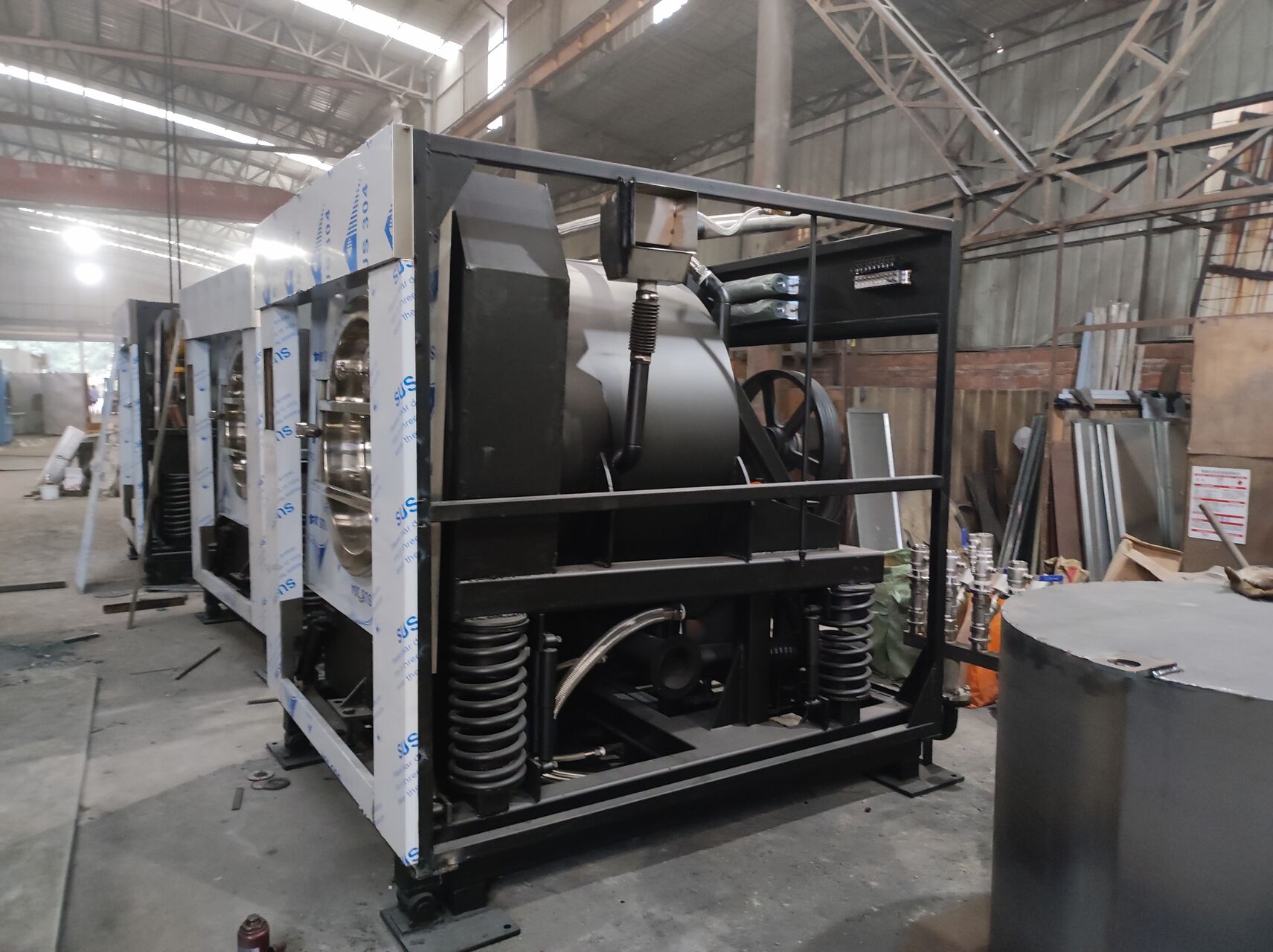
Third, prioritize stability and durability. A laundry factory loses money the moment production stops. Delivering hotel linens even an hour late can cost a client. Equipment that breaks down frequently not only disrupts production but also requires extra maintenance staff. The core quality indicators for industrial washing machines are threefold: bearing load capacity, drum welding craftsmanship, and control system stability. These unseen details determine whether a machine runs steadily for five years or spends its last two years in constant repair.
Continuous Batch Washers vs. Standalone Machines: Do the Math Before Deciding
The biggest decision point in laundry equipment selection today is whether to choose a continuous batch washer (CBW) or stick with standalone machines.
CBW systems—also known as tunnel washers—are the mainstream choice for large-scale laundries. A complete line includes washing, pressing, drying, and finishing, and is best suited for factories with an average daily processing volume of 10 tons or more. The advantages are clear: labor savings, water savings, steam savings, and consistent quality. While a CBW system requires an investment of over a million yuan, the payback period is typically two to three years through labor cost reductions alone.
But CBWs aren't the answer for everyone. For small to medium-sized factories processing 3 to 5 tons per day—or those handling complex, small-batch linen types with high flexibility requirements—standalone machines are often more practical. The key is choosing the right standalone machines: high extraction force, easy loading, intelligent controls. With two operators managing three machines, output can double compared to older equipment. This kind of "lightweight upgrade" often has a shorter payback period.
Four Hard Metrics for Laundry Equipment Selection
Regardless of whether you choose a CBW or standalone machines, owners can focus on four hard metrics:
Load Capacity Ratio: What is the actual load capacity relative to the rated capacity? Many machines are overrated—a machine claiming 100 kg may struggle with 70 kg. The true load capacity directly determines equipment utilization and cost per kilogram washed.
G-Factor: The higher the G-factor, the drier the linens after extraction, and the shorter the drying time. High-G-factor machines can reduce drying time by more than 30%, saving real money on steam costs.
Automation Features: Automatic detergent dosing systems, automatic unloading, remote fault diagnosis—these aren't gimmicks. They're the key to real labor savings.
Service Radius: Industrial washing machines are capital-intensive assets. Service response time determines downtime. Choosing a brand with a local service network—one that can dispatch a technician within two hours—is more valuable than any other feature.
Those Who Do the Math Will Thrive
Let's return to Lao Zhang's laundry factory. Earlier this year, he finally decided to retire his old equipment and replace it with new industrial washing machines featuring higher automation and better extraction efficiency. The equipment investment cost him over 800,000 yuan, and he winced at the expense. But after six months, he did the math: his workforce dropped from 22 to 14, saving nearly 500,000 yuan in annual labor costs; water, electricity, and steam expenses fell by 18% compared to the same period last year; linen quality became more consistent, hotel complaints dropped to zero, and he signed two new long-term contracts with hotel chains.
"I used to think equipment was expensive," Lao Zhang reflected. "Now I realize that people are even more expensive."
The laundry industry is undergoing a transformation from labor-intensive to technology-intensive. The old model of throwing people at the problem is no longer sustainable. The future of competition will be defined not by who has the most workers or the longest overtime hours, but by who achieves the highest labor efficiency, lowest energy consumption, and most consistent quality. Choosing the right equipment isn't just about saving money—it's about securing survival and growth for the next three to five years.
In an era of rising labor costs and shrinking margins, the anxiety of laundry factory owners is real. But the path forward is clear: replace labor with equipment, reduce costs through automation, and win through efficiency. Rather than struggling against rising labor costs, let your equipment bring costs down and quality up.

+86 158-2025-1513

1744149454@qq.com

No. 2, Xinghai Road, Lanhe Town, Nansha District, Guangzhou, China

Product
News Center
Copyright
