
 +86 158-2025-1513 +86 158-2025-1513
News Center
Global environmental protection policies are becoming increasingly stringent, the manufacturing industry is busy transforming and upgrading, and the demands of downstream industries such as hotels, hospitals, and textiles are quietly changing — the industrial washing market in 2026 is undergoing a visible structural transformation. Data from Grand View Research is straightforward: the global industrial washing machinery market size has reached 12 billion US dollars this year, and at this rate, it will undoubtedly exceed 18 billion US dollars by 2030, with a compound annual growth rate (CAGR) of 5.8%. As the world's core production base for industrial washing equipment, China accounts for more than 60% of global production capacity. With its core advantages of energy conservation, compliance adaptability, and efficiency and income improvement, high-efficiency and environmentally friendly industrial washing machines have gradually squeezed out traditional models to become the most sought-after choice for enterprises in various industries when making purchases, leading the entire industry into a new track of high-quality development.
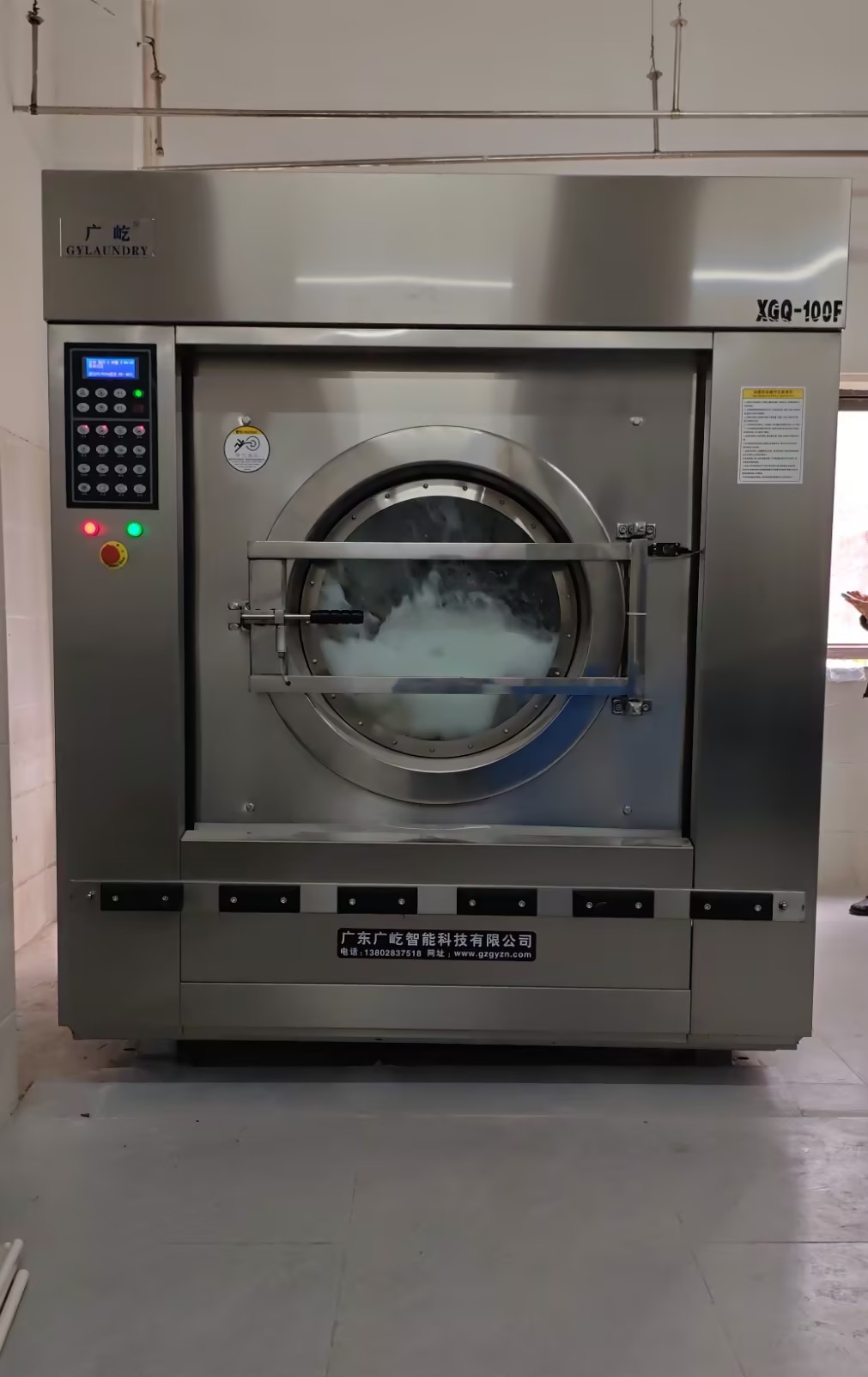
When it comes to why high-efficiency and environmentally friendly industrial washing machines have emerged suddenly, policy drive and environmental pressure are definitely the two most critical driving forces. In 2026, the "Blue Book of China's Environmental Protection Industry Policies" issued by the Ministry of Ecology and Environment has drawn a hard red line: the solvent recovery rate of the industrial washing industry must reach more than 90%, and those old high-energy-consuming and high-emission models will eventually be eliminated by the market. Let's do a quick calculation: a traditional industrial washing machine consumes about 0.3 kWh of energy per kilogram of clothes, but its solvent recovery rate is only 85%, resulting in considerable solvent emissions throughout the year. Precisely because of this, many enterprises have stumbled due to excessive emissions. This year alone, 15% of professional washing enterprises nationwide have been ordered to rectify, with total direct economic losses reaching 230 million yuan. Faced with such a situation, enterprises will naturally figure out the cost — rather than taking compliance risks and wasting money, it is better to switch to high-efficiency and environmentally friendly models, which are both worry-free and cost-saving. No wonder the market demand for such models has been rising all the way.
The upgrading of downstream industry demands has further highlighted the advantages of high-efficiency and environmentally friendly models. Take the garment industry, for example: the "small-batch, multi-batch" order model is becoming more and more common now. The single washing cycle of traditional models, which takes 60 to 90 minutes, can hardly keep up with the enterprises' demand for processing 500 to 1,000 kilograms of linen per day. A knitting enterprise in Zhejiang once suffered such a loss — due to insufficient washing efficiency, its order default rate reached 10%, and this part of direct losses accounted for 12% of its annual net profit. Looking at fields such as hotels and hospitals, the requirements for washing hygiene are becoming stricter and stricter. The high-temperature sterilization and low-residue characteristics of high-efficiency and environmentally friendly models can just meet the washing needs of linen and medical fabrics, which is something traditional models cannot match. What's more, with labor and energy costs increasing day by day, high-efficiency and environmentally friendly models can reduce energy consumption by 40% and shorten the washing cycle by 30%, which not only reduces energy expenditure but also improves production capacity, helping enterprises achieve tangible cost reduction and efficiency improvement. Isn't this exactly what enterprises need for high-quality development?
The support of technological iteration has also made the performance of high-efficiency and environmentally friendly industrial washing machines better and better, and their market position has naturally become more and more stable. Now, the technological thinking of the industrial washing industry has changed — instead of passive remediation through "end-of-pipe treatment", it has shifted to active prevention and control through "source reduction". The wide application of new technologies such as 304 stainless steel inner barrels, heat pump refrigeration recovery, and Internet of Things (IoT) monitoring has enabled the models to achieve triple breakthroughs in environmental protection, efficiency, and stability. For instance, the 304 stainless steel inner barrel has 5 times stronger acid and alkali corrosion resistance than ordinary carbon steel, with a service life of more than 10 years — 60% longer than traditional models. The heat pump recovery system is even more powerful, which can increase the solvent recovery rate to 99%, significantly reducing pollutant emissions. In addition, the IoT monitoring module can collect equipment operation data in real time and issue fault warnings in advance, reducing downtime by 30% and meeting the diverse needs of enterprises in all aspects.
With such strong market demand, many domestic industrial washing equipment enterprises are stepping up R&D efforts and constantly enriching their product portfolios. Among them, Guangdong Guangyi can be regarded as a deep-rooted player in the industry. With its solid technological strength and precise market positioning, it has become a benchmark in the field of high-efficiency and environmentally friendly industrial washing machines. Located in Nansha District, Guangzhou, Guangdong Guangyi focuses wholeheartedly on the R&D, production, and sales of industrial washing equipment. Its product range covers various categories such as fully suspended automatic washing machines, industrial washing machines, and hygienic isolated washing machines. All along, adhering to the concept of "green design and lean quality", the enterprise's products not only have high stability, low energy consumption, and high automation but also can adapt to the washing needs of various industries such as garments, hotels, and hospitals. It also provides enterprises with comprehensive laundry room solutions, helping them not only adhere to the bottom line of environmental compliance but also achieve the dual goals of cost reduction and efficiency improvement.
Looking ahead to the second half of 2026 and beyond, with the continuous advancement of the "dual carbon" goal and the continuous innovation of technology, the market penetration rate of high-efficiency and environmentally friendly industrial washing machines will surely become higher and higher, and intelligence, customization, and integration will also become the new development direction of the industry. Guangdong Guangyi will not stop its pace either; it will continue to deepen technological R&D, focus on the core needs of enterprises, and constantly optimize product performance. With high-quality, cost-effective products and perfect services, it will provide efficient and environmentally friendly washing solutions for enterprises in various industries, and work together with partners in the industry to promote the steady development of the industrial washing industry towards a green, efficient, and intelligent direction.

+86 158-2025-1513

1744149454@qq.com

No. 2, Xinghai Road, Lanhe Town, Nansha District, Guangzhou, China

Product
News Center
Copyright
