
 +86 158-2025-1513 +86 158-2025-1513
News Center
The global wave of green development has swept across all industries, and the industrial production sector is also deepening its efforts in the race to reduce costs and improve efficiency. For hotels, hospitals, and central laundries, industrial washing machines are no longer just simple cleaning tools, but the core lifeline supporting daily operations, quietly completing the iterative transformation from "extensive energy consumption" to "precision and high efficiency." Essentially, measuring the core competitiveness of such equipment boils down to three key aspects: material reliability, precise energy control, and operational convenience. An industrial washing machine integrating full stainless steel quality, extreme energy-saving design, and intelligent operation experience is precisely reshaping the industry's inherent perception of efficient washing.
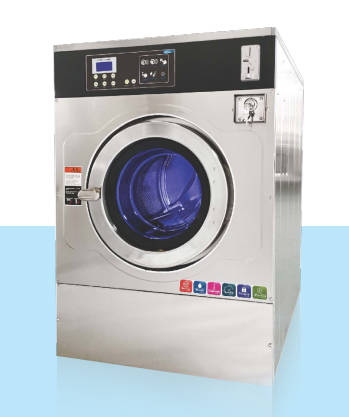
The foundation of a high-quality device always lies in its materials. The full stainless steel structure is the confidence behind this equipment's robust durability. Traditional industrial washing machines often suffer from insufficient corrosion resistance of materials, leading to inner drum deformation and component rust after a short period of use. This not only shortens service life but also may compromise the hygiene and safety of washed fabrics. This equipment, however, takes a different approach with an all-molded structural design. Its inner drum, outer drum, and front and rear plates of the outer drum are all made of three-layer 304 stainless steel through mold pressing, achieving a truly full-body stainless steel configuration.
The advantages of 304 stainless steel speak for themselves. Its excellent corrosion and wear resistance can easily withstand harsh working conditions such as long-term high-temperature washing and chemical detergent erosion, significantly extending the equipment's service life. More importantly, it eliminates material contamination from the source and upholds the hygiene bottom line of washed fabrics—an absolute necessity for scenarios like hospitals and food processing enterprises that have near-stringent hygiene standards.
Amid soaring operational costs, breakthroughs in energy-saving technology have long become the core driver for laundries to cut costs and boost efficiency, even reshaping the entire energy consumption pattern of industrial washing. The ability to save water and electricity directly determines the profit margin of a laundry. Through scientific structural design, this equipment minimizes the water volume ratio for washing and accelerates heating speed considerably compared to ordinary devices. Hard test data shows it saves 30% water and 25% electricity compared to traditional models, translating to substantial operational cost savings for enterprises over the long run.
In fact, its energy-saving ingenuity doesn't stop there. The innovative circular bottom structure of the outer drum fundamentally eliminates cleaning blind spots and even removes the large water storage tank essential for ordinary equipment—no need to pre-fill 30 liters of water into the tank; water is directly injected into the drum, curbing water waste at the source. Meanwhile, the equipment can precisely mix cold and hot water to reach the set temperature, avoiding futile energy consumption. Coupled with three heating modes—electric, steam, and external hot water—it can switch flexibly according to different scenarios, further maximizing energy efficiency, which perfectly aligns with the industry's green transformation trend under the "dual carbon" goal.
In industrial washing scenarios, loading/unloading efficiency for bulk laundry and fabric damage rate are always top concerns for operators. The meticulous refinement of humanized design and intelligent configuration in this equipment strikes a balance between the two, enhancing efficiency while protecting fabrics. The groundbreaking 630mm extra-large washing door widens the operational opening significantly, making it much easier to load and unload heavy linens, work clothes, or bulk garments. It also allows real-time clear observation of washing conditions for timely program adjustments.
The intelligent control system is equally well-thought-out. The LED display supports 5-language switching, easily adapting to diverse labor scenarios. Operators can not only monitor washing speed in real time but also flexibly adjust rotation speed based on fabric material and dirt level, achieving precise washing that minimizes fabric wear and maximizes fiber protection. What's more, the built-in LED lighting inside the drum puts an end to blind spots in dark washing, enabling clear inspection of residual clothes and cleaning status inside the drum, further improving operational convenience.
From material innovation laying a durable foundation, to energy optimization opening up cost-reduction channels, and intelligent control combined with humanized design enhancing user experience, this industrial washing machine accurately addresses long-standing industry pain points, providing a comprehensive, efficient, energy-saving, and durable solution for the industrial washing sector. As a seasoned player in the industry, Guangdong Guangyi has always regarded technological innovation as its core competitiveness, focusing on performance upgrading and experience optimization of industrial washing equipment. By deeply integrating full stainless steel quality, extreme energy-saving technology, and intelligent configuration, it has crafted high-quality products that truly meet market demands.
In the future, Guangdong Guangyi will undoubtedly continue to deepen its commitment to technological R&D, using more competitive equipment to assist various industries in achieving green and efficient washing, and leading the industrial washing machine industry into a new stage of high-quality development. This is not only the enterprise's path of dedicated cultivation but also perhaps the inevitable direction of industry upgrading.

+86 158-2025-1513

1744149454@qq.com

No. 2, Xinghai Road, Lanhe Town, Nansha District, Guangzhou, China

Product
News Center
Copyright
