Balita
The profit margins of the washing industry are continuously squeezed by water, electricity, labor, and maintenance costs. The core production capacity of linen washing plants is highly dependent on main equipment such as industrial washing machines and laundry batch washers. Although old equipment can still operate superficially, it quietly erodes corporate profits. Most laundry operators face the same dilemma: should they replace machines if they are not completely broken? There is no fixed standard for equipment renewal. The most practical solution is to determine the replacement time based on operational data and equipment wear patterns. Based on real production conditions in the commercial washing industry and long-term equipment maintenance data from Guangdong Guangyi, this paper analyzes the replacement cycle of industrial washing machines and laundry batch washers, providing actionable renewal references for linen washing enterprises.
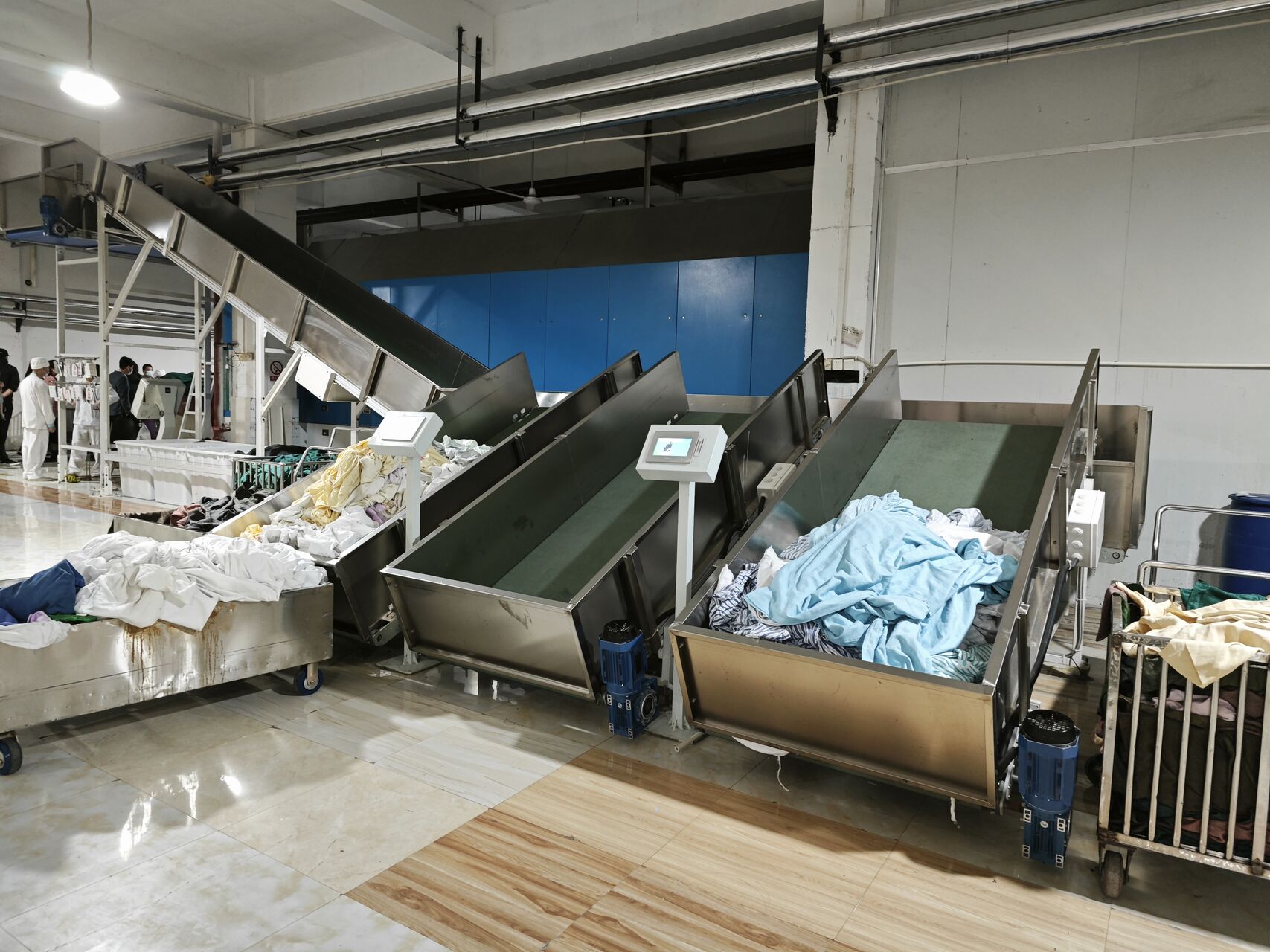
1. Basic Service Life of Industrial Washing Equipment
There are no mandatory scrapping regulations in the washing industry. Equipment service life is determined by working load, maintenance frequency and production environment. Under normal room-temperature conditions with an 8-hour daily working schedule, ordinary industrial washing machines can serve for 10 to 15 years. Nevertheless, most laundries in the Pearl River Delta adopt two-shift or three-shift continuous production. Heavy operation directly shortens equipment lifespan, and such machines generally need renewal within 8 to 10 years. Fully automatic laundry batch washers feature complex structures and integrated pipelines, requiring higher maintenance standards. With standardized upkeep, their service life remains stable at 12 to 15 years.
Statistics on washing equipment after-sales data in the past three years show consistent equipment depreciation patterns. In the first five years, metal components and motor transmission systems stay in optimal condition, with a failure rate below 3%. From the fifth to the tenth year, wearing parts including sealing gaskets, transmission shafts and bearings begin to age in batches, increasing annual maintenance frequency by over 40%. After ten years of service, problems such as body corrosion and circuit aging occur intensively, making it difficult for water consumption and sewage discharge indicators to meet current environmental standards. Rooted in the South China washing equipment market, Guangdong Guangyi has optimized equipment depreciation criteria to adapt to the local humid environment and corrosive water quality, perfectly matching the operational logic of regional laundries.
2. Practical Criteria for Equipment Replacement in Laundries
2.1 Excessive Maintenance Costs Lead to Zero Operational Value
A widely recognized industrial criterion states that equipment should be replaced immediately if a single maintenance cost reaches 50% of the new machine price. Old washing machines frequently suffer from eccentric drum noise, steam joint leakage and temperature control failure. Repeated disassembly and maintenance not only increase spare parts expenditure but also occupy regular production time. A medium-sized linen laundry in the Pearl River Delta recorded that a 9-year-old industrial washing machine caused more than 18 days of production downtime within one year, with shutdown losses exceeding the residual value of the equipment. Undoubtedly, retaining such aging machines brings no economic benefits to production workshops.
2.2 High Energy Consumption and Sewage Discharge Fail Compliance Requirements
Early-generation industrial washing machines adopt an open water circuit design with extremely low water recycling efficiency. Actual tests prove that to process one ton of linen, old equipment consumes 42% more water and around 25% more steam than energy-saving new models. With increasingly stringent industrial sewage supervision across regions, elevated standards for COD and suspended solids in washing wastewater make outdated equipment prone to rectification warnings due to the lack of water purification and filtration structures. Equipped with closed-loop water circulation systems and frequency conversion drive modules, the latest industrial washing machines and laundry batch washers from Guangdong Guangyi reduce energy consumption and sewage discharge by optimizing internal pipeline layouts to meet current environmental production requirements.
2.3 Insufficient Production Capacity Restricts Business Expansion
Demand for hotel linen, medical textiles and industrial workwear washing keeps rising year by year. Old standalone washing machines feature fixed procedures and low dehydration speed, resulting in long single-batch washing time and linen backlogs during peak order seasons. These traditional machines rely heavily on manual loading, unloading and parameter adjustment, keeping labor costs at a high level. In contrast, laundry batch washers adopt a connected assembly line structure, automatically completing feeding, washing, rinsing, dewatering and discharging with minimal manual intervention. For large-scale laundries processing over 20 tons of linen daily, batch washers deliver irreplaceable capacity advantages.
2.4 Aging Hardware Structures Cause Potential Safety Hazards
Hidden dangers always lie in subtle details of long-serving washing equipment. Corroded steel plates, cracked insulating layers and failed safety latches cannot be completely repaired through routine maintenance. Operational risks such as electric leakage, drum stalling and unexpected shutdowns threaten the personal safety of workshop operators. Moreover, old equipment lacks intelligent sensing modules to monitor washing temperature and dehydration speed in real time. Unstable disinfection and cleaning effects may cause batch washing defects, gradually damaging corporate cooperation reputation.
3. Practical Selection Suggestions for Laundry Equipment Upgrades
After confirming renewal demands, equipment selection determines the profitability of laundries in the next few years. Small and medium-sized laundries with a daily washing capacity below 8 tons are advised to avoid blind investment in large assembly line equipment. Compact frequency-conversion industrial washing machines with flexible operation can fully meet daily production needs. For scaled factories processing more than 15 tons of linen per day, fully automatic laundry batch washers serve as the optimal solution to cut costs and improve efficiency through assembly line production.
Manufacturing craftsmanship and after-sales service are core considerations in equipment procurement. Specializing in the R&D and production of industrial washing equipment, Guangdong Guangyi manufactures machines with thickened 304 stainless steel plates and industrial-grade pure copper motors, ensuring excellent acid and alkali resistance for long-term high-intensity operation. The intelligent touch control system supports customized washing procedures based on linen materials and dirt levels, accurately regulating water and electricity consumption while guaranteeing washing quality, which conforms to the refined operation trend of modern laundries.
According to industrial operational data, the reasonable replacement cycle of industrial washing machines ranges from 10 to 15 years, while that of laundry batch washers is 12 to 15 years. Service life is merely a reference standard; maintenance expenditure, energy consumption, production capacity and safety risks constitute the core judgment indicators. Laundries are neither recommended to shorten the service life cycle artificially nor overuse aging equipment. Upgrading hardware with reliable manufacturers and optimizing workshop production structures help maintain stable profitability amid fierce industrial cost competition.

+86 158-2025-1513

1744149454@qq.com

2, Xinghai Road, Lanhe Town, Nansha District, Guangzhou, China

Product
News Center
Copyright