Balita
In the large-scale commercial laundry sector, most practitioners have long focused on the performance iteration of washing and drying main units, with few taking the time to examine the hidden losses in the subsequent ironing and folding links. In a complete linen washing workflow for hotels, washing and stain removal lay the foundation, dehydration serves as a transitional step, and it is the final ironing procedure that truly determines the finished appearance of linens, labor cost occupancy, and overall turnover efficiency. Pillowcases, as high-volume small-sized linens, are scattered in batches and cumbersome to flip manually, with inconsistent flatness after manual ironing. They have long stood as a time-consuming and labor-intensive pain point in laundry workshops. The launch of the ZTTP-1400 Pillowcase Flatwork Ironer precisely fills an easily overlooked gap in the segmented track of industrial laundry equipment.
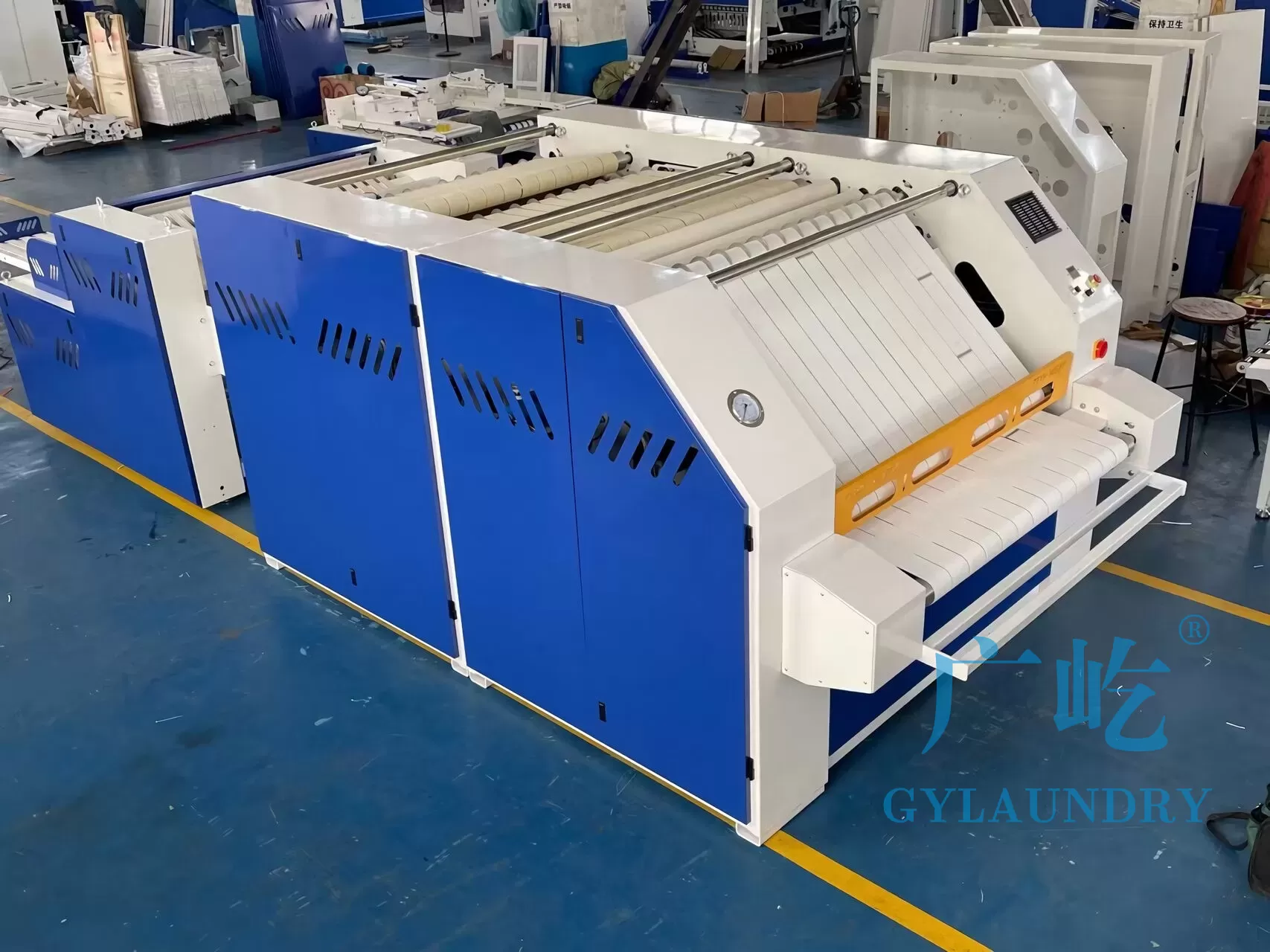
Hotels, hospitals, high-end homestays and large-scale elderly care institutions generate massive volumes of pillowcases for replacement and cleaning every single day. The drawbacks of manual ironing are self-evident: operators repeat labor with hand irons for hours on end, suffering from arm strain and capped working speeds. When bulk orders pile up during peak seasons, factories can only boost output by hiring more staff. Worse still, manual work fails to deliver unified standards. Uneven heat distribution on both sides of pillowcases leaves residual wrinkles and messy ironing marks, which directly damage service reputation once placed in guest rooms. Is there a piece of equipment capable of one-step double-sided ironing for pillowcases to resolve the flipping hassle for small linens from a structural perspective? The ZTTP-1400 model offers a practical solution.
The core ingenuity of this dedicated pillowcase ironer lies in its internal S-shaped fabric feeding structure. Four rollers form a circulating transmission path. After pillowcases enter the machine, they travel along the S-shaped track automatically and press against high-temperature stainless steel drying cylinders sequentially on both sides for heat setting. A single feeding completes full ironing for the front and reverse sides. We can easily visualize the operating state: linens glide smoothly within the closed track without manual pulling or flipping. It eliminates safety risks of staff touching high-temperature components and erases flatness discrepancies caused by human operation. The stainless steel drying cylinder features a compact structure with rapid heat conduction and minimal heat dissipation, boasting outstanding thermal energy utilization among ironing equipment of the same specification. The energy saving gap accumulated from continuous long-hour operation translates into substantial cuts in production costs over time.
The calibration of the drive system fully reflects in-depth research on actual workshop working conditions during product development. Equipped with a variable frequency drive system, the machine allows operators to steplessly adjust running speed within the 5–30 m/min range based on the dampness, fabric thickness of pillowcases and daily order volume. During hotel check-out peaks, operators can ramp up speed to process bulk linens; for small sporadic batches, low-speed operation cuts down idle power consumption. Such flexible speed regulation delivers remarkable practicality amid variable working scenarios in laundries. It supports a standard steam pressure of 0.4–0.6 MPa compatible with conventional boiler systems, and can also run on natural gas or electric heating. Small and medium-sized laundries do not need to overhaul heating pipelines for equipment adaptation, lowering supporting installation and modification costs.
The durability of the frame and transmission components directly affects the full-lifecycle operating costs of industrial equipment. The integrated thickened welded frame resists shaking and displacement even during high-speed operation under heavy workshop loads. Two transmission options, V-belt and chain drive, are both optimized for buffering and noise reduction. Operating noise stays within a reasonable range during full-load running, preventing long-term hearing damage to on-site workers. Key technical parameters clearly define its industrial positioning: four 725mm-diameter rollers with 5mm wall thickness form the core ironing assembly, and the 1400mm maximum ironing width covers most standard pillowcase sizes. With a 2.6kW motor, 380V industrial voltage, overall dimensions of L3600×W2350×H1750mm and a 3000kg net weight, the machine ensures stable operation and easy hoisting and installation without major factory renovation. Its hourly steam consumption of 150kg fits the energy budget of most medium and small laundries.
Many laundry business owners fall into the trap of only focusing on upfront purchase prices while updating post-finishing linen equipment, ignoring comprehensive long-term operating costs. Though a dedicated pillowcase ironer counts as a fixed asset investment, its benefits permeate daily operations in multiple ways. Previously two to three dedicated workers were required for pillowcase ironing, yet a single operator can handle feeding and collection after equipment deployment. The long-term savings on labor salaries and social insurance will quickly offset the equipment amortization expense. Standardized double-sided ironing elevates linen quality, serving as a differentiated competitive edge to secure high-standard cleaning contracts from premium hotels and medical facilities, thus expanding revenue streams.
The commercial laundry industry has moved far beyond the crude model of stacking multiple machines. Refined segmentation and specialized equipment for individual linen categories have become the consensus for top-tier laundries to improve quality and reduce costs. Washing machines guarantee cleanliness, folding machines organize sheets and duvet covers, and pillowcase ironers tackle the finishing bottleneck of small linens. Only with a streamlined assembly line with each unit performing its designated role can workshops operate with maximum efficiency.
As a manufacturer deeply engaged in R&D and production of complete industrial laundry systems, Guangyi Intelligent keeps polishing specialized machinery for segmented scenarios such as hospital isolated laundry and linen post-finishing. From barrier washers and high-speed ironer lines to dedicated pillowcase ironing equipment, it empowers the automated upgrading of the laundry industry with technological breakthroughs in niche product categories.

+86 158-2025-1513

1744149454@qq.com

2, Xinghai Road, Lanhe Town, Nansha District, Guangzhou, China

Product
News Center
Copyright