ข่าว
Sanitary safety in the medical industry allows for no carelessness whatsoever. Step into any hospital, and you’ll find everything from the cold, sterile instruments in the operating room to the soft yet impeccably clean bed linens in patient wards, from the crisp work uniforms of medical staff to the personal clothing worn by patients. The cleanliness of every piece of fabric is tied to the nerves of medical quality, connected to the hope of patient recovery, and even bears on the hospital’s standing in people’s minds. How could ordinary washing equipment take on such a responsibility? The emergence of hospital-specific industrial washing machines that meet sanitary standards has truly addressed the needs of medical cleanliness. With professionalism, standardization, and intelligence, they have built an invisible line of defense for the medical industry, ensuring every medical fabric can withstand the strictest inspections—this kind of cleanliness is what truly brings peace of mind.
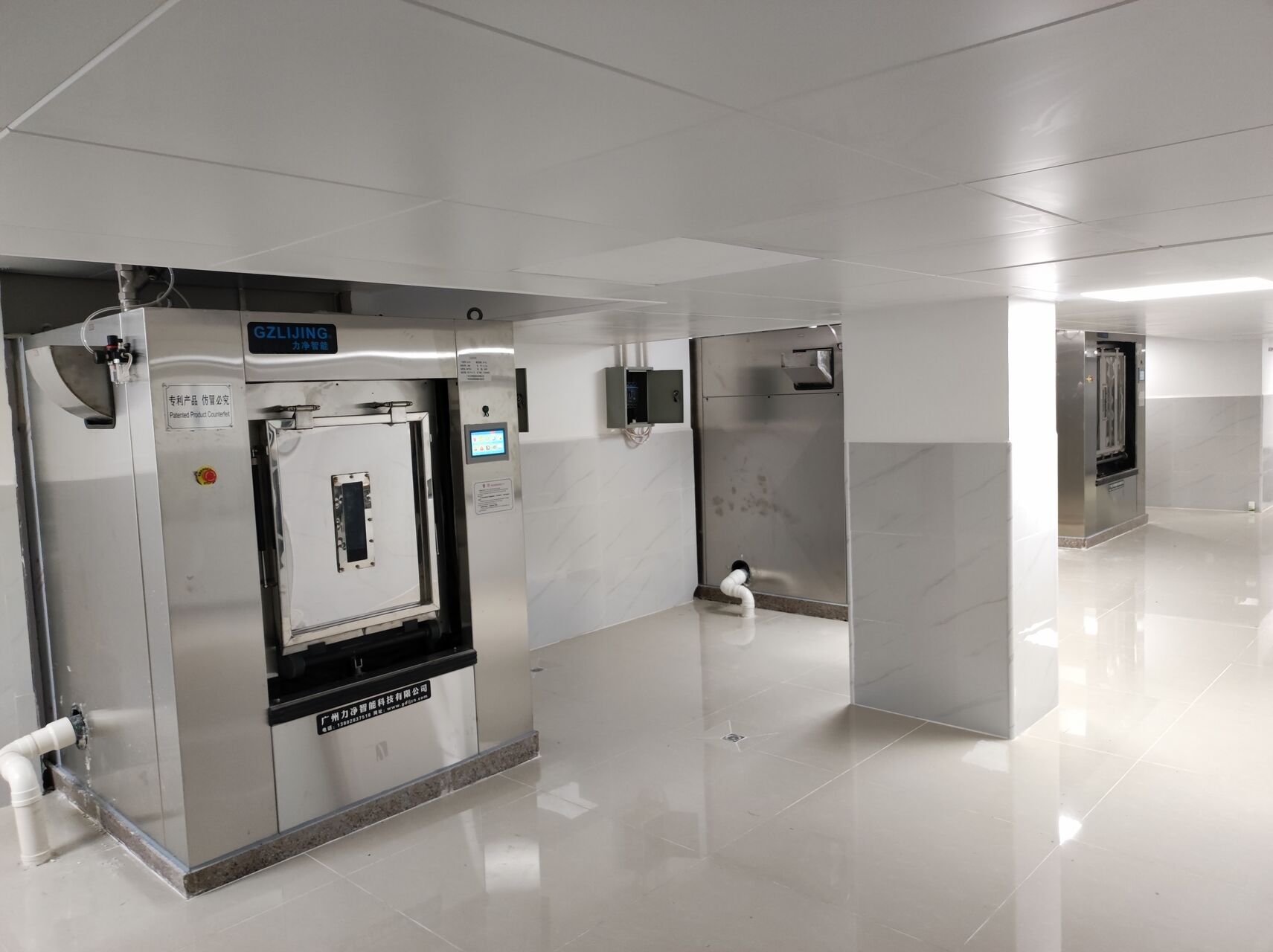
Hospitals are inherently special public spaces, and the cleaning and disinfection of medical fabrics are far more rigorous than doing laundry at home or washing linens in hotels. Naturally, the requirements for washing equipment are extremely high. Compared with ordinary industrial washing machines, the core mission of hospital-specific models is more than just "cleaning"; they must also achieve thorough disinfection and sterilization to cut off the possibility of cross-infection—and this is the fundamental difference between the two. Think about it: medical fabrics are inevitably stained with patients’ body fluids, blood, or even residual medicinal liquids, harboring various pathogenic bacteria and viruses. If cleaning and disinfection are inadequate, these fabrics become mobile "carriers of infection"—the threat to patient recovery and medical staff safety is truly unthinkable. That’s why hospital-specific industrial washing machines are designed around "medical-grade cleanliness" from the start. Every functional configuration and every operational link must comply with medical industry standards, which is also the key to their place in hospitals.
It sounds easy to accurately meet hospital sanitary standards, but in practice, it involves many intricate details. The most thoughtful design of these specialized washing machines is their hygienic isolation structure, which directly separates the dirty area from the clean area, leaving no room for contact between the two. Linens are fed in from the dirty side and taken out from the clean side after washing and disinfection, with one-way flow throughout—no mixing, no cross-contamination, eliminating secondary pollution at the source. What’s even more reassuring is their disinfection capability: a combination of high-temperature washing, ozone disinfection, and ultraviolet sterilization works together to keep the water temperature steadily above 75C for a sufficient duration, achieving a sterilization rate of over 99.9%. Even stubborn drug-resistant bacteria like MRSA can be effectively inactivated. Pathogens and residual stains on fabrics are completely removed, fully complying with the latest Technical Standards for Cleaning and Disinfection of Medical Fabrics in Medical Institutions. It’s no exaggeration to say that every medical fabric can reach a sterile level.
Strict disinfection alone is not enough. Hospitals generate an astonishing amount of medical fabrics every day—operating gowns, hospital bed linens, medical staff uniforms, patient clothing, and more. These fabrics need to be turned over quickly; if washing efficiency lags behind, it could easily affect clinical diagnosis and treatment. Hospital-specific industrial washing machines have taken this into account, balancing efficiency and practicality. They adopt a large-capacity design, capable of washing dozens of kilograms of linens at a time. Coupled with the integrated washing and drying function, there’s no need for manual transfer, saving a lot of trouble and improving efficiency. A single machine can complete multiple washing batches a day, always ensuring a timely supply of medical fabrics—never delaying the work of medical staff or leaving patients waiting for clean clothes.
Upgrades in intelligence and energy efficiency have made these specialized washing machines more suitable for hospital needs. Most mainstream devices on the market now come with an intelligent control system preloaded with multiple dedicated washing programs. No manual repeated adjustments are needed; it can automatically match the most suitable water temperature, rotation speed, and washing duration according to the fabric’s material and contamination level—not only ensuring the effect of cleaning and disinfection but also well protecting the fabric fibers, reducing damage, and extending the service life of those medical fabrics. What’s even more remarkable is that they integrate energy-saving technologies such as variable frequency speed regulation, water recycling, and heat recovery. Compared with traditional equipment, they can save 40% water and more than 25% steam. For hospitals, this not only reduces the operational costs of logistics but also practices environmental protection concepts—killing two birds with one stone. In addition, the full-suspension shock absorption structure greatly reduces the noise and vibration during operation. Even if placed in the hospital’s logistics area, it will not affect the diagnosis and treatment environment; this detail is truly considerate.
The medical industry is constantly developing, and sanitary standards are continuously improving. Naturally, hospitals’ demand for specialized industrial washing machines is also growing, and the entire industry is moving towards greater compliance, intelligence, and efficiency. Perhaps some people don’t know that in the past, some hospitals used non-compliant washing equipment, leading to inadequate disinfection of medical fabrics. This not only put them at risk of compliance penalties but also exposed patients and medical staff to infection hazards. The popularization of specialized industrial washing machines has not only solved the long-standing problem of cleaning and disinfection in hospitals but also promoted the standardization and regularization of the logistics washing link in medical institutions, becoming an important helper for hospitals to improve their logistics support capabilities and safeguard medical safety.
The faster the industry develops, the more enterprises focus on the R&D and production of hospital-specific industrial washing machines, striving to optimize product performance and improve quality to keep up with hospitals’ increasingly strict sanitary requirements. Among these enterprises, Foshan Lijing is a long-standing brand deeply rooted in this field. With years of experience in the industrial washing equipment industry, it has profound technical accumulation and a good understanding of hospitals’ actual needs. The hospital-specific industrial washing machines meeting sanitary standards developed by Foshan Lijing strictly comply with medical industry standards in every design aspect, integrating isolation structure, multiple disinfection technologies, and intelligent control systems. They not only achieve medical-grade cleaning and disinfection effects but also balance high efficiency, energy saving, and easy operation, perfectly adapting to all types of medical fabrics in hospitals. Foshan Lijing has always adhered to the original intention of "guarding medical cleanliness and supporting medical safety", providing reliable washing solutions for hospitals at all levels with professional products and thoughtful services, ensuring every medical fabric is clean and worry-free, making medical staff work more at ease and patients feel more assured during their treatment.
There is no such thing as a "small matter" when it comes to medical cleanliness. The cleanliness of every piece of medical fabric is a respect for patients’ lives and health, and a reflection of the hospital’s responsibility and commitment. Hospital-specific industrial washing machines meeting sanitary standards use professional strength to hold the bottom line of medical cleanliness, and strict standards to build a line of defense for medical safety, becoming an indispensable core equipment in medical logistics. In the future, with the continuous iteration of technology, specialized industrial washing machines will surely become more intelligent, efficient, and environmentally friendly, contributing to the high-quality development of the medical industry. Foshan Lijing will also continue to deepen its presence in this niche field, continuously innovate and upgrade, and use better products and services to help the cause of medical cleanliness reach a new level, guarding every hope of health.

+86 158-2025-1513

1744149454@qq.com

เลขที่ 2 ถนนซิงไห่ เมืองลังเหอ เขตหนานซา กวางโจว ประเทศจีน

Product
News Center
Copyright