ข่าว
The profit ledger of large-scale commercial laundries is always hidden in trivial energy consumption and working hours. Many operators focus on optimizing staff scheduling and controlling detergent costs, yet often overlook long-term cost differences brought by equipment itself. Even with the same batch of linens, different washer-extractor models can create a noticeable gap in water and power consumption for subsequent drying and ironing processes. This explains why 18° forward-tilting industrial washer-extractors have gradually become a priority upgrade option for medium and large washing plants in recent years.
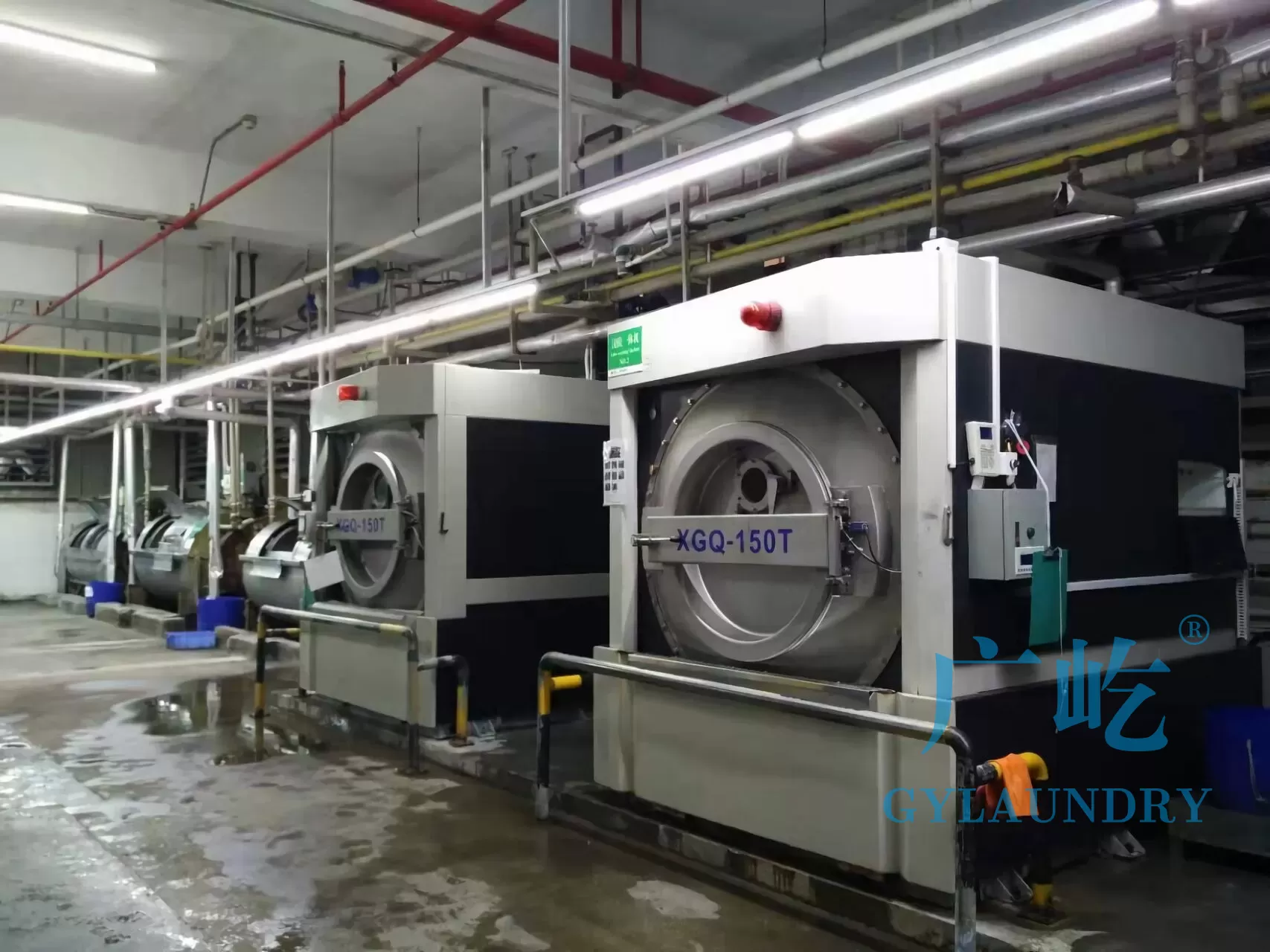
After dehydration in conventional vertical industrial washer-extractors, linens pile at the bottom of the drum. Operators have to bend deep into the drum to retrieve materials. Repeated bending over long shifts easily causes lumbar strain, and material handling efficiency drops further during intensive night shifts. The 18° forward tilt seems like a minor adjustment to the drum angle, yet it reshapes the entire unloading workflow. The inclined drum uses gravity to guide linens toward the loading door naturally. Workers no longer need to stretch deep inside and can finish unloading quickly from a stable standing position. When multiple tilting washer-extractors run alongside a laundry tunnel washer, the labor hours saved per shift translate into tangible payroll cuts in monthly accounts.
Dehydration performance remains an indispensable benchmark for evaluating industrial washer-extractors, and 320G high g-force delivers far more value than shorter dehydration cycles within a washing line. Lower residual moisture in linens cuts the volume of water that dryers need to evaporate. Let us work through a real operational example. Standard washer-extractors leave higher moisture content in linens, forcing dryers to extend heating cycles and driving up gas or electricity bills. The 320G centrifugal force effectively strips free water trapped inside fabric fibers and lowers final moisture levels, shortening dryer run times. For laundries operating multiple shifts all year round, daily energy savings add up and show clearly on monthly utility invoices.
Come to think of it, many equipment buyers only compare upfront prices and treat initial investment as the sole benchmark. Few calculate the total cost of ownership across three to five years. High-performance tilting washer-extractors may carry a slightly higher purchase tag than standard vertical units. Still, combined gains from lower energy use, reduced labor demand and less wear on drying equipment shorten the payback period faster than many expect. This benefit gap widens for laundries handling stable bulk orders for hotel linens, hospital textiles and workwear, as equipment runs under heavy load year-round.
Beyond cost advantages, tilting washer-extractors adapt well to ongoing shifts across the washing industry. Tighter environmental regulations continue to update standards for wastewater discharge and energy consumption nationwide. Superior dehydration reduces water carry-over in discharged linens and eases the workload of supporting wastewater treatment systems. Some plants face site constraints without room for large-scale renovation due to ceiling height and workflow layouts. The forward tilting unloading design also optimizes internal logistics, allowing linen carts to sit close to the loading door and cut transport distances across the workshop.
Some may wonder whether high g-force dehydration accelerates wear on core components such as drums and bearings. Qualified tilting industrial washer-extractors undergo counterweight calibration and shock absorption tuning during development to withstand high centrifugal operating conditions. Robust shock dampers reduce vibration generated during high-speed spinning, easing impact on building foundations and lowering risks of loose fasteners and abnormal component noise. Reliable equipment requires fewer maintenance visits and limits costly downtime that delays order fulfillment. During peak seasons with full order books, downtime on core washer-extractor units halts entire production lines, and such potential losses far exceed routine maintenance expenses.
Competition within the washing industry is transforming quietly. Low-price bidding can barely sustain long-term operations. Precise cost control and consistent delivery hold the key to protecting profit margins. As core plant assets, equipment selection should not rely solely on datasheet parameters. It must align with order structures, workshop layouts and shift schedules. The 18° forward-tilting industrial washer-extractor equipped with 320G high g-force fits most large-scale laundries targeting better efficiency and lower costs. It balances operational ease, energy management and long-term stability for diverse linen washing applications.
From single-unit upgrades to full washing line overhauls, an equipment manufacturer’s understanding of real working conditions directly determines whether its products can truly solve laundry pain points. With years of expertise in washing machinery, Foshan Lijing keeps refining tilting industrial washer-extractors and a complete range of washing equipment. It develops cost-effective models tailored to actual operating scenarios of domestic laundries and delivers dependable hardware support for washing enterprises of all sizes.

+86 158-2025-1513

1744149454@qq.com

เลขที่ 2 ถนนซิงไห่ เมืองลังเหอ เขตหนานซา กวางโจว ประเทศจีน

Product
News Center
Copyright