News
Anyone who’s worked in factory logistics knows that a frontline employee’s work uniform is never just ordinary clothing. In a mechanical workshop, the uniform caked with thick oil; in a mining and industrial area, covered in dust and mud; in an auto repair shop, smeared with engine oil and wax stains; and in a food processing plant, stained with proteins—these stubborn stains cling to the fabric, impossible to remove with a casual scrub. They end up being a persistent headache in logistics management.
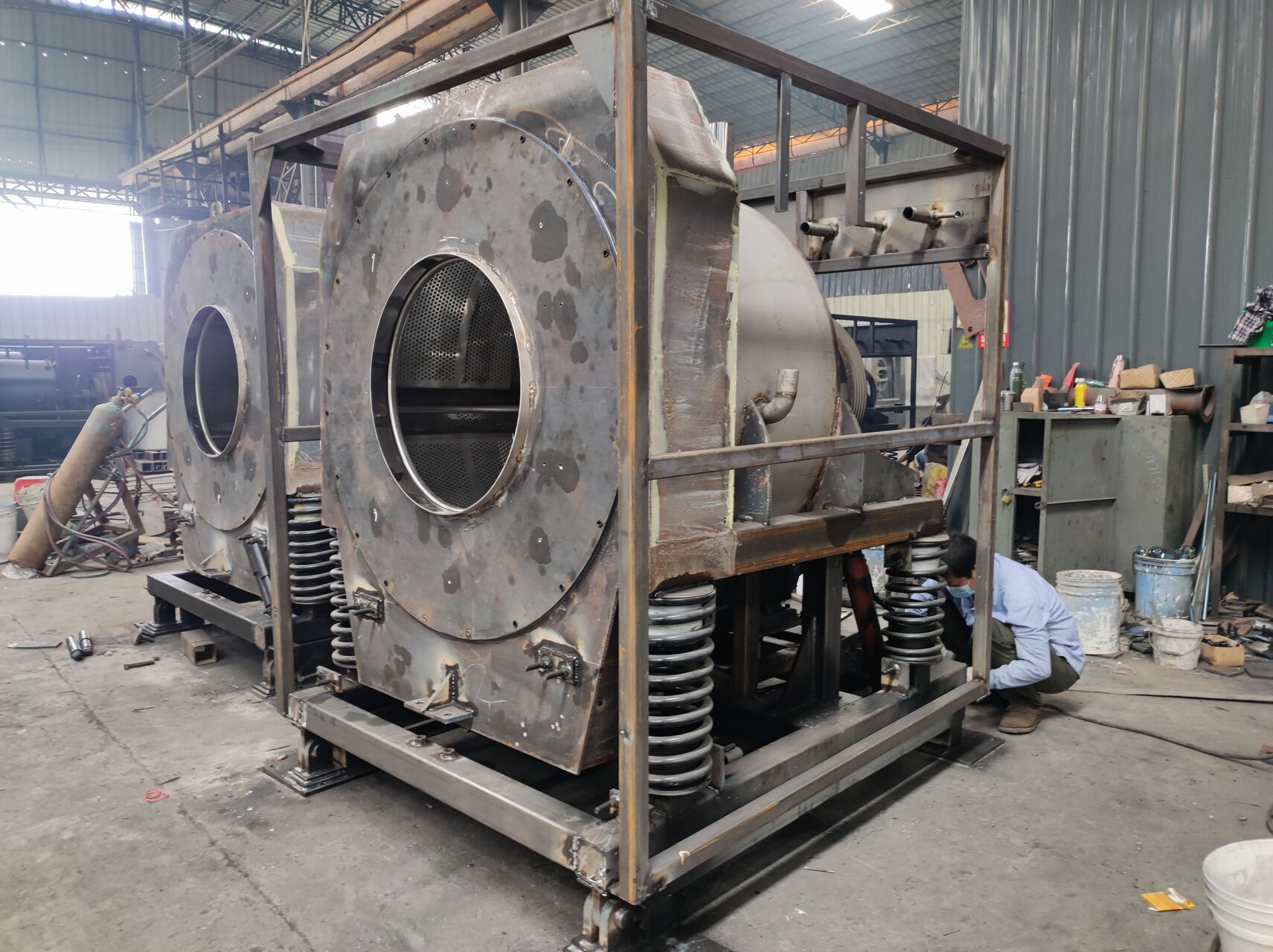
Many factories still rely on household washing machines or even manual scrubbing to clean work clothes. This not only takes time and effort but also results in uniforms that either retain yellow oil stains or become increasingly stiff after washing, making them uncomfortable for employees. It also drags down the overall hygiene image of the facility. Let alone meeting the strict hygiene standards required in food processing, chemical, and similar workshops. Isn’t there a more efficient and hassle-free way? The answer is clear: a professional industrial washing machine is the core solution to the factory workwear washing problem, and it’s the mainstream choice for optimizing logistics and reducing costs in modern large-scale factories.
Speaking of which, the pain points of washing factory workwear are far more complex than those of ordinary commercial or household laundry, and regular equipment simply can’t handle such high-intensity demands. The stains on frontline workwear are diverse and heavy. In heavy industry workshops, oil, rust, and dust seep into the fabric texture. Ordinary washing machines with low speed and weak water flow can only rinse off surface dust, leaving deep dirt untouched. No matter how many times you wash, obvious marks remain. Employees wearing such uniforms not only look unhygienic but also suffer in their work.
Then there’s the washing volume. Even a moderately sized factory has hundreds or even thousands of employees, requiring regular batch replacement and centralized cleaning of work uniforms. Ordinary washing machines only have a few kilograms of capacity; it takes an entire morning to process just over a dozen sets. During peak shift changes, piles of unwashed clothes pile up, making it easy to face a shortage of clean uniforms. Moreover, most work uniform fabrics are thick and wear-resistant. The rough rubbing method of ordinary washing machines causes seams to open, pilling, and fabric hardening after only a few washes. A uniform that could last a year or two needs to be replaced in bulk in six months, indirectly increasing the factory’s procurement costs.
The most critical issue is hygiene control. In food processing, chemical, electronics, and other workshops, the cleanliness and sterilization requirements for work uniforms are extremely strict. The fear of cross-contamination from bacteria and stains is ever-present. Ordinary equipment lacks professional sterilization functions, making it impossible to meet the factory’s hygiene control bottom line. This is precisely why many factories are replacing their washing equipment with professional models.
Industrial washing machines have become the top choice for factory workwear washing because every aspect of their design and performance is tailored to the actual usage scenarios of the factory. Each advantage aligns perfectly with the needs of logistics management. They cover a wide capacity range, from 15kg to 100kg, ensuring that small processing factories and large-scale heavy industry workshops with thousands of employees can find a suitable model. A single load can clean dozens of uniforms, and they support 24-hour continuous operation. Even after peak washing periods following shift changes, they can process clothes quickly, eliminating the need for backlogs and ensuring uniforms are always available for replacement.
They excel at tackling stubborn stains. Equipped with high-power variable frequency motors, the water flow is powerful enough to scour away dirt. Combined with exclusive programs like pre-wash, deep wash, and temperature-enhanced washing, these machines can thoroughly remove deep-seated dirt such as heavy oil, rust, and dust by adjusting water temperature and rotation speed—no manual scrubbing required. They can also flexibly switch washing modes for different factory requirements: high-power mode for heavy industry workwear and low-temperature sterilization mode for food factory workwear, ensuring cleanliness while gently protecting the fabric and reducing wear and tear.
Factory equipment needs to be robust and durable. Industrial washing machines are built with thick 304 stainless steel for both the and inner drum, offering corrosion and wear resistance. They won’t rust or deform even with daily exposure to industrial detergents. Under normal use, their service life is 3 to 5 times longer than ordinary washing machines. They run stably and reliably with minimal failures, eliminating the need for frequent downtime and perfectly matching the high-intensity logistics rhythm of factories. Additionally, they come with intelligent water and detergent control systems, reducing water, electricity, and detergent consumption by over 30% compared to ordinary equipment. For long-term batch washing, this adds up to considerable operational savings, making them far more cost-effective than muddling through with ordinary equipment.
When selecting an industrial washing machine for a factory, there’s no need to blindly pursue high-end configurations; fitting the actual scenario is the most practical approach. Heavy industry factories with over 1,000 employees should prioritize large-capacity, high-speed models above 50kg that emphasize strong decontamination and high-temperature sterilization. Small and medium-sized processing factories and light industrial workshops can fully use 20-50kg models for maximum cost-effectiveness. For special industries like food processing and chemicals, be sure to select models with professional sterilization and disinfection functions to ensure compliance with industry regulations. It’s also advisable to choose user-friendly, easy-to-maintain units so that logistics staff can operate them without specialized training, minimizing operational errors.
A suitable industrial washing solution isn’t just about replacing a machine; it resolves a string of problems—unclean washes, inefficiency, and high costs—plaguing factory workwear cleaning. It enhances logistics management efficiency, extends the service life of uniforms, and standardizes factory hygiene management.
In the industrial washing equipment sector, Foshan Lijing has deep roots in the industry, focusing on R&D and production of industrial washing machines suitable for factories, hotels, hospitals, and other scenarios. Their product line covers the full capacity spectrum. They’ve also customized exclusive washing programs for various workwear stains, delivering strong decontamination, durability, energy efficiency, and stable performance—perfectly meeting the workwear washing needs of different types of factories. Paired with one-stop services including on-site installation, practical training, and comprehensive after-sales support, you won’t have to worry about unresolved major breakdowns. Foshan Lijing is a reliable brand choice for factories building an efficient workwear washing system.

+86 135-3358-6618

1759543062@qq.com

No. 2, Xinghai Road, Lanhe Town, Nansha District, Guangzhou, China

Product
News Center
Copyright