News
Amid the large-scale, intelligent and eco-friendly upgrade sweeping the industrial laundry sector, the tunnel washing system, commonly known as the continuous washer, has emerged as the core equipment for large-scale laundry plants. Faced with massive laundry demands from hotels, hospitals and industrial enterprises, the old operation mode relying on scattered standalone industrial washers has revealed obvious drawbacks. Low operating efficiency, excessive energy consumption and chronic labor shortages have long troubled laundry service operators.
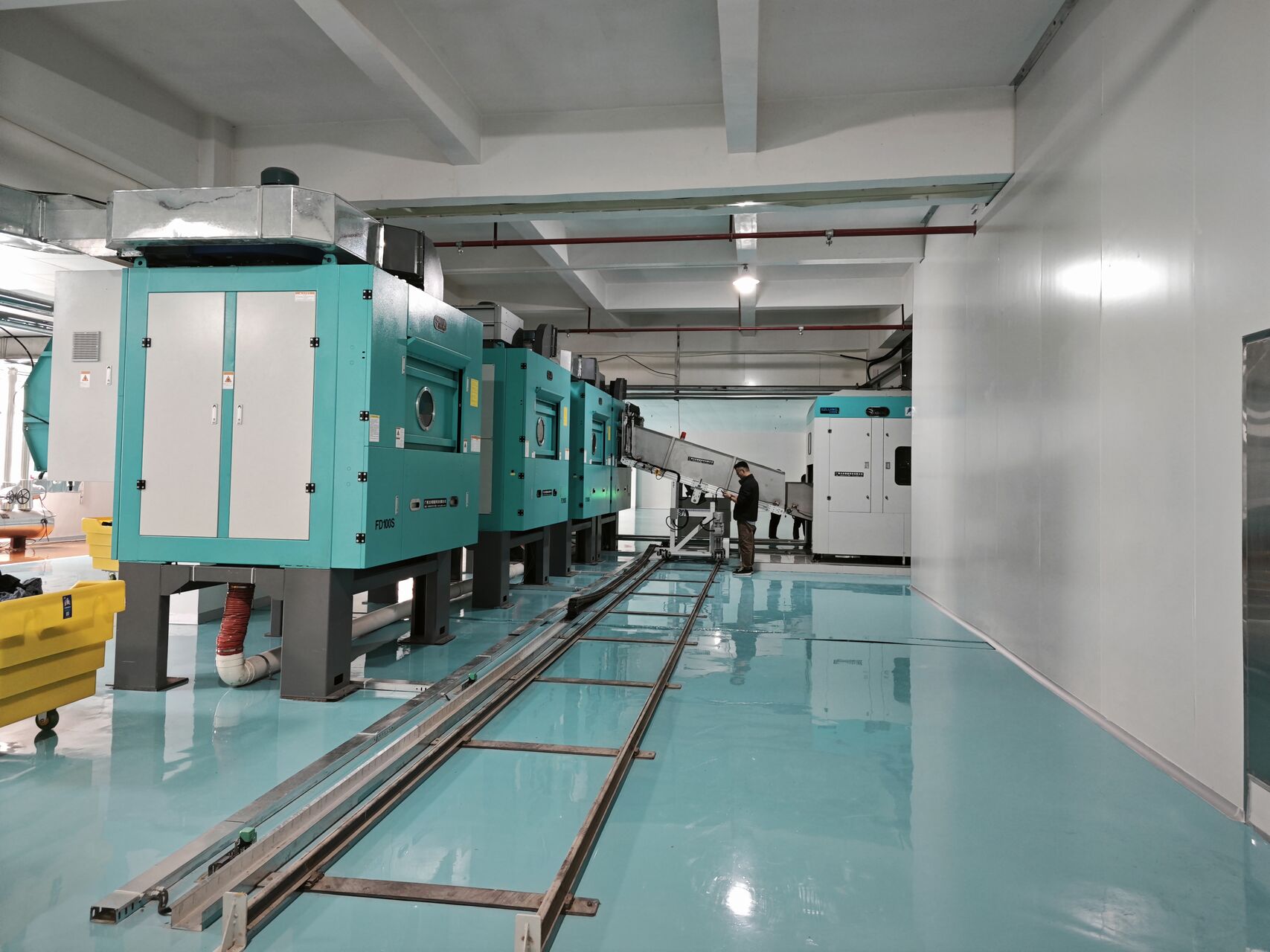
Could a single continuous washer truly take the place of 15 to 20 sets of 100kg-class industrial washing machines? In reality, it represents far more than a simple capacity replacement. Its integrated structural design reshapes the entire laundry workflow, delivering comprehensive advantages in output performance, resource consumption, washing quality and labor arrangement, and has gradually become the mainstream choice for modern industrial laundry production.
When it comes to production capacity, the edge of continuous washers is undeniably prominent. A conventional 100kg industrial washer needs 40 to 60 minutes to finish a single washing cycle, with an actual hourly output of merely 80 to 100 kilograms. Even with five units running simultaneously, the daily processing capacity can barely reach five tons. On top of that, on-site workers have to stay on duty nonstop for loading, unloading and machine operation, leaving little room for output expansion.
Continuous washers adopt a multi-compartment serial continuous washing structure. A full batch of 60 to 65 kilograms of linen can be cleaned every two and a half to three minutes, maintaining a stable hourly output between 1,500 and 2,000 kilograms. The daily processing capacity can easily hit 15 to 20 tons, matching the combined output of nearly 20 traditional industrial washers. Round-the-clock automatic operation eliminates repeated startup and shutdown intervals, as well as efficiency losses caused by manual loading and unloading. For large laundry factories with high daily linen volumes, such stable continuous production is exactly what they need.
Energy and resource costs always account for a major share of daily operating expenses in the laundry industry. With stricter environmental regulations and rising utility prices, optimizing consumption has become essential for sustainable operation. Traditional standalone washers consume 25 to 30 liters of water per kilogram of dry linen. For factories handling 15 tons of linen daily with multiple standalone units, daily water consumption can exceed 330 tons, bringing heavy costs for water usage and sewage treatment.
Continuous washers excel greatly in water conservation thanks to the counter-current rinsing technology and built-in water recycling system. Wastewater generated from pressing and intermediate rinsing will be collected and reused for pre-washing and main washing procedures. The water consumption per kilogram of linen drops to only 6 to 10 liters, cutting overall water usage by over 70%. Such a noticeable reduction directly eases the long-term cost burden for laundry enterprises.
These advanced units also achieve remarkable savings in electricity and steam. Traditional equipment suffers from severe energy waste due to frequent water heating and motor switching. A fleet of 10 industrial washers consumes massive steam and power every single day. The double-layer insulated shell design of continuous washers effectively reduces heat loss, while independent temperature control for each compartment optimizes steam utilization, trimming steam consumption by more than half. Steady motor operation avoids the high energy loss from frequent start-ups, creating clear economic benefits in long-term daily operation.
Labor pressure is another tough challenge haunting the laundry industry. Skyrocketing labor costs and difficult recruitment have pushed traditional labor-intensive laundry workshops into a tight corner. Factories equipped with multiple standalone washers usually need five to six staff members to take charge of linen sorting, equipment operation, material handling and finished product transfer, with labor costs occupying a large proportion of total operational expenditure.
How can factories ease staffing pressure? Automated continuous washing lines offer a practical solution. The whole process from raw linen feeding, washing and dewatering to finished product discharging connects seamlessly through automated transmission systems. Only one or two on-site staff are required to monitor operating status and handle occasional malfunctions, slashing labor reliance by around 80%. Optimized bottom transmission structures lower the risks of linen damage and pipeline blockage, and reverse water flow design prevents cross-color contamination. Workers are freed from repetitive sorting and heavy manual labor, and operational errors that affect washing results can also be greatly reduced.
Washing quality determines user satisfaction and market competitiveness for laundry service providers. Manual detergent dosing and inconsistent parameter setting are common flaws of traditional washing equipment. Unstable water temperature, rotating speed and rinsing times often lead to uneven cleaning results, color bleeding and excessive fabric wear. Frequent linen replacement caused by shortened fabric service life will also add extra operational expenses.
Every working section on a continuous washer is equipped with intelligent digital control. Customized procedures for pre-washing, main washing, neutralization and rinsing can be set independently, with precise regulation on water temperature, detergent dosage, running speed and working duration. Gentle drum swinging movements and reinforced internal baffles enhance stain removal through reasonable friction and beating. Moderate mechanical force protects fabric fibers, and the closed-loop water circulation system further extends the service life of textiles, helping enterprises cut the recurring cost of linen renewal.
Space utilization and standardized management should never be overlooked in large-scale laundry plant planning. Dispersed placement of numerous standalone washers takes up vast floor space, with over 200 square meters required for 15 sets of industrial equipment. Fragmented layout complicates daily maintenance and fault inspection, and unexpected equipment failures are likely to disrupt the entire production schedule.
The highly integrated compact structure of continuous washers requires merely one-third of the floor space compared with traditional equipment of equivalent capacity, helping factories save plenty of rent and infrastructure investment. Real-time data monitoring tracks operating conditions, energy consumption and potential faults across all compartments, and remote intelligent management allows a single manager to oversee the whole production line. Simplified maintenance steps minimize downtime and ensure stable daily output.
In terms of environmental compliance, built-in sewage monitoring modules record real-time energy consumption and discharge data, fully meeting regulatory requirements for environmental protection supervision. It also helps enterprises obtain green factory certification and standardized quality system accreditation. More high-star hotels and large institutional clients nowadays set green and intelligent equipment as a key cooperation threshold, leaving backward traditional laundry models gradually phased out of the market.
Beyond simple capacity upgrading, the application of continuous washers marks a fundamental upgrade of the industrial laundry operation model. It addresses the core pain points of low efficiency, high costs and labor shortage, and helps laundry enterprises strengthen market competitiveness amid industry upgrading.
In the R&D and manufacturing of professional industrial laundry equipment, Guangdong Guangyi has accumulated in-depth technical experience and rich practical industry insights. Its full range of high-performance continuous washers integrate mature European technologies, balancing high efficiency, energy conservation, stable operation and intelligent control. Tailored one-stop large-scale laundry solutions are provided for hotels, medical institutions and industrial users, making it a reliable partner for equipment upgrading and long-term development of modern laundry plants.

+86 135-3358-6618

1759543062@qq.com

No. 2, Xinghai Road, Lanhe Town, Nansha District, Guangzhou, China

Product
News Center
Copyright