News
Expanding laundry capacity is never as simple as purchasing extra machines. This is especially true for hotel linens and hospital healthcare textiles, two categories marked by volatile order volumes and tight delivery deadlines. Many laundries have expanded facilities and added machine positions, yet they still struggle with delayed deliveries. With fixed workshop space and rising labor costs, where lies the key to higher throughput?
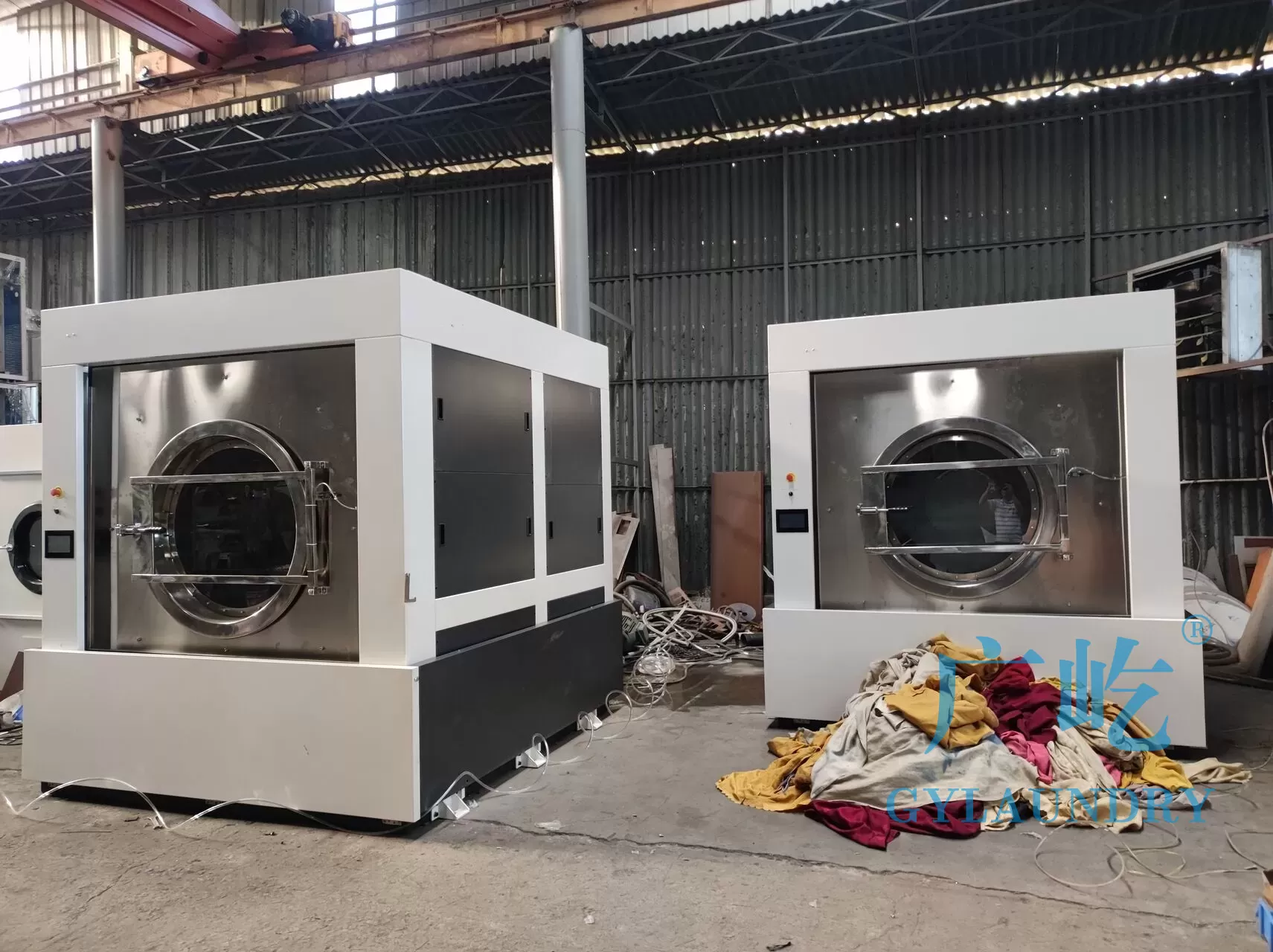
Many laundry operators first consider adding more machines, relying on parallel conventional horizontal washer-extractors to handle larger loads. This approach works reasonably well during stable business periods. But when hotel occupancy spikes during holidays, or hospital wards send out batches of soiled textiles for laundering, the whole production line quickly clogs. Horizontal models require staff to manually drag linens out after extraction. Unpredictable unloading times create bottlenecks between consecutive processes, stretching overall wash cycles. Even with multiple units running, front-end feeding stays smooth while piles of linens build up waiting for transfer, preventing full capacity utilization.
The growing adoption of tilt automatic washer-extractors directly addresses overlooked pain points in capacity expansion. Equipped with a tilting unloading structure, the drum inclines automatically once washing and extraction finish. Linens slide out under their own weight, eliminating repeated heavy pulling and manual handling. Single-machine unloading time drops substantially, accelerating workflow across the entire line. Many renovated laundry facilities cut several minutes from each full wash cycle. When accumulated across daily operations, the overall throughput gain becomes notable.
Healthcare textile washing follows strict regulatory requirements, with mandatory segregation, disinfection and zoning protocols. Tilt washer-extractors can be configured as separated dual-compartment units, keeping contaminated and clean textiles isolated to avoid cross-contamination. Shortened operating cycles do not compromise disinfection and washing standards, a critical feature for laundries serving medical clients. For hotel linens, reduced rough manual handling lowers abrasion on sheets, duvet covers and towels. Extended linen lifespans help cut recurring replacement costs over time.
In practice, capacity upgrades should not focus solely on cycle duration. Workshop layout, water and power consumption, plus maintenance demands all deserve evaluation. Traditional horizontal washer-extractors need wider clearance for manual unloading, leading to looser machine arrangement and fewer installable units within limited floor space. Tilt models discharge in a fixed direction, allowing compact line configuration. Major workshop reconstruction is often unnecessary to unlock extra capacity. New-generation tilt automatic washer-extractors feature optimized inlet and drain piping. Higher spin speeds deliver lower residual moisture, reducing energy use for subsequent drying and ironing.
Consistent long-term equipment reliability sustains stable output. Laundries operating at peak volume see frequent machine cycling, accelerating component wear. Improved transmission systems on tilt models deliver gentler unloading movements with reduced impact loads, extending service life for bearings and shock absorbers while cutting downtime. Every operator knows unexpected breakdowns during peak season can delay full batches of linens and cost long-term hotel and hospital contracts.
Some may question whether higher upfront investment for tilt automatic washer-extractors makes the payback period too long compared with standard horizontal alternatives. Real-world renovation cases tell a different story. Higher throughput from shorter cycles, reduced labor, slower linen wear and lower downstream energy use combine tangible benefits. Most projects hit projected payback targets. Capacity expansion represents a long-term business decision; judging equipment solely by purchase price risks short-sighted choices.
Suitable solutions vary by laundry scale. Smaller service providers can start by replacing outdated core machines with tilt units to eliminate workflow bottlenecks. Mid-sized and large laundry campuses can design fully automated lines with linked tilt washer-extractor groups paired with conveyor systems for linen transfer, further reducing labor dependence. Before renovation, operators should measure cycle times across existing stations to identify actual bottlenecks before finalizing machine specifications. Blind equipment purchases only waste resources.
The laundry industry is moving away from labor-intensive, low-efficiency operations toward refined management. Hotels and hospitals impose stricter requirements on delivery reliability and wash quality each year. Competition hinges less on pricing alone; consistent, fast delivery retains valuable clients. Optimizing workflows and shortening wash cycles with tilt automatic washer-extractors lets laundries process larger volumes within smaller footprints and fewer staff. This method merits priority consideration for current capacity expansion projects. Foshan Lijing has years of experience developing industrial laundry machinery, continuously refining tilt automatic washer-extractors and core laundry equipment to support expansion and upgrades for hotel and hospital laundry operations.

+86 158-2025-1513

1744149454@qq.com

No. 2, Xinghai Road, Lanhe Town, Nansha District, Guangzhou, China

Product
News Center
Copyright