
 +86 158-2025-1513 +86 158-2025-1513
News Center
Anyone with years of experience in the industrial laundry sector knows all too well about the industry’s real struggles. Market competition grows fiercer by the day, yet profit margins keep getting squeezed tighter and tighter. Water and electricity bills keep climbing, labor costs remain stubbornly high, and traditional standalone washing machines fail to boost productivity while constantly drawing complaints over unsatisfactory linen cleaning results.
In truth, the real way for laundry centers to break free from the cost crunch is not to slash profits reluctantly, but to invest in better equipment. Continuous batch washers, also known as tunnel washers, serve as a practical and powerful solution. Cutting water, electricity and labor expenses all at once, they perfectly address the core demands of today’s laundry businesses.
Industrial laundry has long been labeled a high-consumption sector, with excessive usage of water, energy and manpower standing as three major operational burdens. Traditional washers adopt a straightforward one-cycle water replacement mode. Fresh water is fully drained after each wash, leaving almost no room for recycling.
It is not uncommon to see small-scale laundry facilities drowning in soaring water fees due to massive daily linen processing. The same goes for energy waste. When multiple standalone machines run simultaneously, idling motors and repeated heating cycles lead to massive unnecessary power loss, dragging overall energy utilization far below 50%.
Labor shortages and rising payrolls add another layer of pressure. A production line handling 20 tons of linens per day once required a workforce of over a dozen workers for sorting, loading, material handling and detergent dosing. Staff absences and improper manual operation often trigger delivery delays or linen damage, bringing extra financial losses that no operator can afford to ignore.
Continuous batch washers have fundamentally reshaped operational models and relieved the industry of long-standing burdens. Unlike scattered standalone equipment, they integrate pre-washing, main washing, rinsing, neutralizing and dewatering into one streamlined production line.
There is no need to transfer linens manually between separate machines, saving massive time and physical labor. This modular structure is not just an upgrade in workflow design, but a well-conceived system built around efficient energy conservation, ensuring every unit of resource is put to optimal use.
Water conservation stands out as one of the most impressive strengths of continuous batch washers. A traditional machine may consume over 1,000 liters of water for one ton of linens, while advanced counter-current water recycling technology completely changes this situation.
Fresh water is injected from the final rinsing section and flows gradually toward the front cabins, reused sequentially for rinsing, main washing and pre-washing. Wastewater generated from rinsing and pressing is filtered and purified for secondary circulation, minimizing fresh water intake.
Many laundry operators have witnessed obvious changes after upgrading their equipment. Water consumption per ton of linens drops to under 300 liters, achieving a water-saving rate of over 70%. The monthly savings on water bills alone can be surprisingly substantial, bringing tangible benefits for long-term operation.
These advanced washing units also deliver outstanding energy efficiency. Decentralized motors and independent heating systems on traditional machines cause overlapping energy waste, whereas a continuous batch washer only needs a small number of variable-frequency drive motors to support full-line operation.
Operating speed adjusts intelligently based on actual linen loads to avoid idle power consumption. Centralized heating systems and double-layer insulated cabins effectively reduce heat loss. Cabin temperature is precisely calibrated for different stages — low temperature for pre-washing, high temperature for main washing and normal temperature for rinsing — eliminating blind heating and redundant energy consumption.
The overall power-saving rate can exceed 60%, with greatly reduced steam consumption, effectively stabilizing long-term energy expenditure for laundry plants.
What wins the highest recognition from laundry operators is dramatic labor reduction. Formerly crowded workshops with non-stop manual work can now run smoothly with merely one or two on-site operators.
The entire process, from automatic feeding, conveying and washing to dewatering and discharging, operates autonomously. Detergent dosing is controlled accurately by intelligent digital systems, removing unstable manual measurement. Reasonable bottom transmission design also lowers linen blockage risks and daily maintenance workload.
Slashing most manual workloads directly cuts labor costs by around 80%. Funds previously spent on excessive staffing can be redirected to equipment maintenance and service improvement, creating a healthier business cycle.
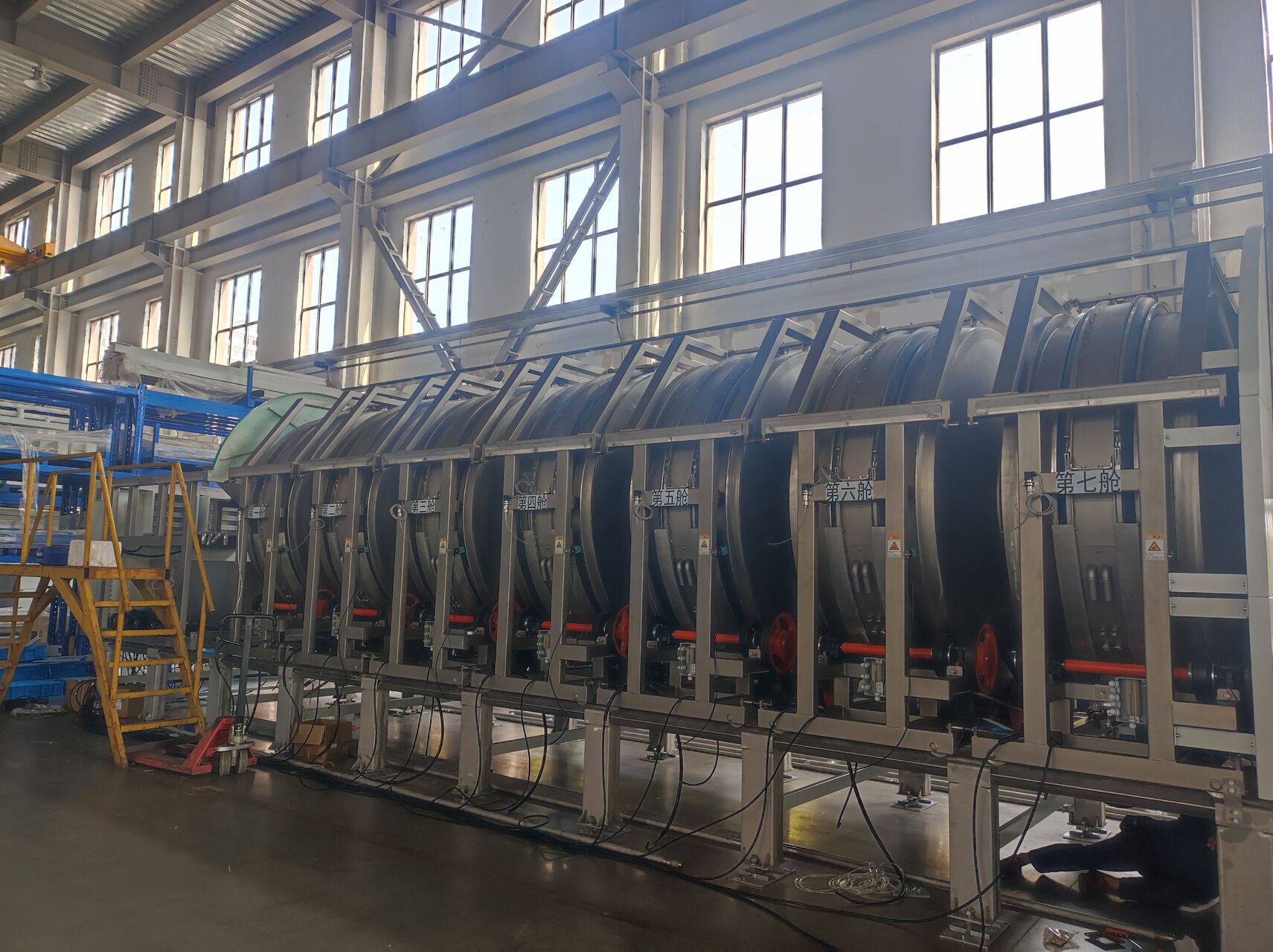
Beyond core cost-saving advantages in water, electricity and labor, continuous batch washers bring extra operational value through high productivity and stable cleaning quality. Hourly linen processing capacity ranges from 1,200 to 2,000 kilograms, with daily output reaching 20 to 50 tons, three to five times the capacity of traditional equipment.
Round-the-clock non-stop operation meets peak delivery demands without frequent downtime. Each washing section performs standardized procedures to remove surface dust, heavy stains and chemical residues step by step. Processed linens stay soft, bright and hygienic, fully meeting strict hygiene standards for hotels, medical institutions and catering businesses.
Equipped with intelligent centralized control systems, these washers store hundreds of customized washing programs. Operators can switch modes flexibly according to fabric materials and stain levels. Real-time monitoring of operational data, energy consumption and daily output also makes refined factory management much easier.
The industrial laundry landscape has undergone tremendous shifts in recent years. Cutthroat price competition has given way to competition focused on operational cost control and production efficiency. Outdated high-consumption washing modes are gradually losing competitiveness in the evolving market.
As a core upgraded device tailored for industrial transformation, continuous batch washers deliver visible cost reduction and efficiency improvement for large chain laundry factories, hospital laundry rooms and hotel supporting washing facilities alike.
Among mainstream equipment manufacturers in the industry, Foshan Lijing has built a solid reputation with robust technical capabilities and rich practical experience. Adopting high-grade imported core components and corrosion-resistant stainless steel structures, its continuous batch washers feature durable quality and convenient modular maintenance.
Customized cabin configurations are available to match different daily output requirements. With mature water and power saving technologies, high automation and a low linen damage rate, Foshan Lijing’s laundry equipment has been widely applied across hospitality, healthcare, education and catering sectors.
Choosing reliable industrial washing equipment is key to sustainable development. With proven market performance and user feedback, Foshan Lijing provides cost-effective, energy-saving and fully optimized laundry solutions, helping modern laundry centers lower overall operating costs and secure steady development amid intense market competition.

+86 158-2025-1513

1744149454@qq.com

No. 2, Xinghai Road, Lanhe Town, Nansha District, Guangzhou, China

Product
News Center
Copyright
