
 +86 158-2025-1513 +86 158-2025-1513
News Center
Anyone who has long worked in hotel logistics, hospital laundry rooms, or professional laundromats knows that an industrial washing machine is never a piece of equipment you can buy casually. It acts as the "heart" of the entire laundry operation: choose the right one, and linen turnover runs smoothly with controllable costs; choose the wrong one, and you’ll face low efficiency, stubborn stains, and frequent breakdowns at best, slowing down the whole operation, and ending up spending far more money unnecessarily than the price difference of the machine itself.
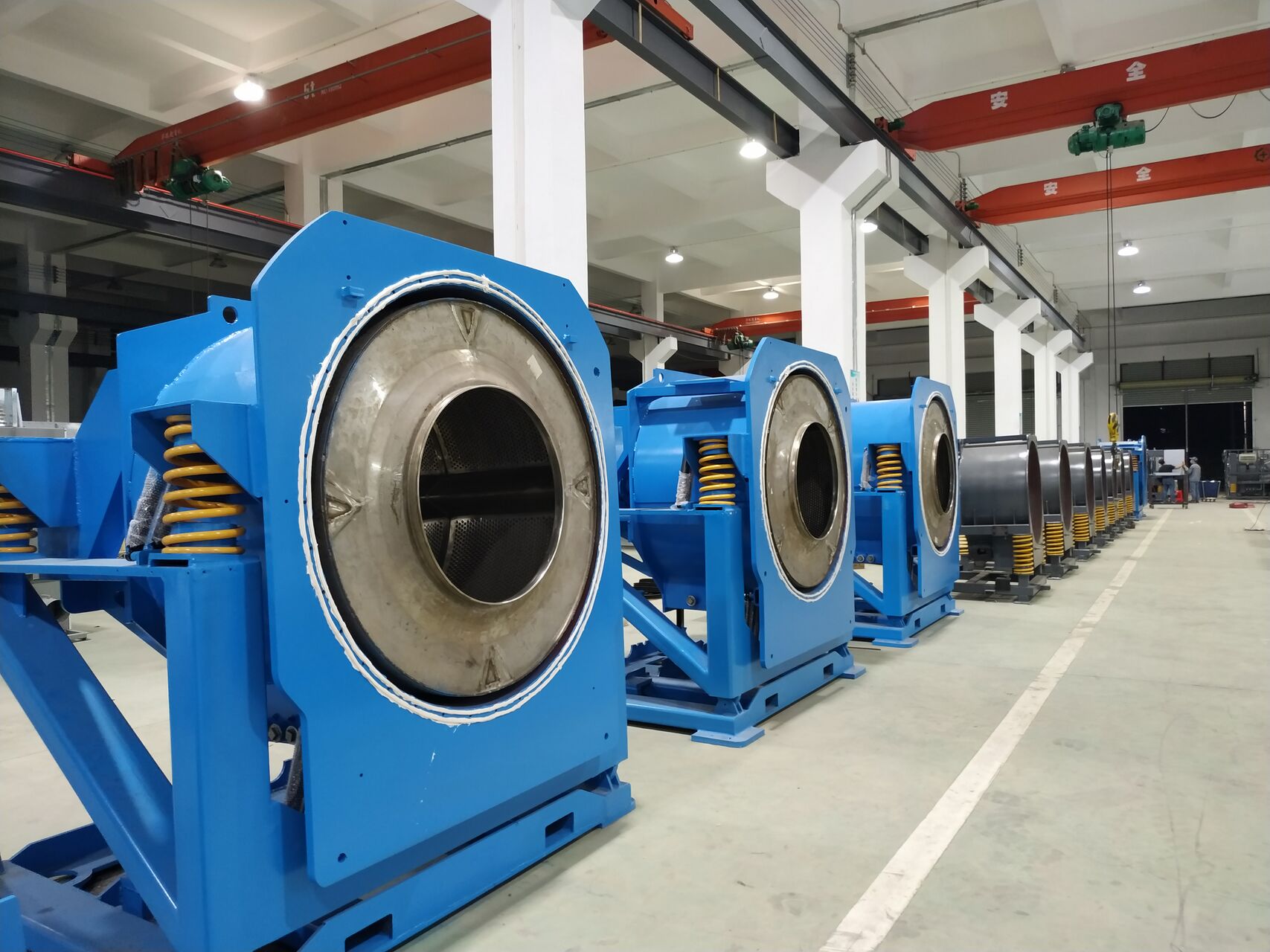
Many purchasers fall into similar traps—fixing only on low prices, or blindly picking large-capacity models thinking bigger is always better. As a result, small venues can’t bear the energy consumption and floor space of oversized machines, while large spaces struggle with undersized models that keep staff busy all day. At the end of the day, they haven’t grasped the core logic of model selection. There’s no standard answer for choosing an industrial washing machine; only by focusing on details and making comparisons based on your own actual scenarios can you pick the most suitable one.
Capacity is the first factor you must get right when choosing an industrial washing machine—mess this up, and no later adjustments will fix it. For small budget hotels, community health service centers, or small factories with uniform washing needs, a 15-30kg model is more than enough. It completes each wash quickly, consumes less water and electricity, and avoids idle waste. For medium-sized hotels, specialist clinics, or small-to-medium laundromats with moderate daily laundry volumes, a 30-50kg model strikes the perfect balance between batch washing and flexible turnover, without taking up too much space, and can handle daily peak demands.
As for large chain hotels, tertiary hospitals, or centralized laundromats, where linen and uniforms pile up by the hundreds each day, large-capacity models of 50kg or even 100kg are a necessity. They handle large loads in one cycle, cutting down on wash cycles and boosting efficiency drastically. It’s also wise to leave around 20% extra capacity for peak periods—holiday travel rushes, hospital patient surges—so you won’t force the machine to run at full load nonstop. After all, even the most durable equipment will age prematurely under long-term overloading.
Digging deeper, equipment material and durability are the deciding factors for service life. Industrial washing machines are exposed to water and various detergents every day, and hospital models also contact disinfectants regularly. Ordinary materials start to rust and corrode in less than half a year, shortening the service life and easily snagging and damaging linen.
Insightful buyers always check the inner drum and body materials first—thickened 304 or 316 stainless steel is the reliable choice. It’s corrosion and impact resistant, with a finely polished inner wall that prevents snags and pilling when washing bed linen and patient gowns. Paired with sturdy bearings and sealed craftsmanship, it runs steadily even with 24-hour continuous operation, and its service life is several times longer than ordinary carbon steel models.
The power system is equally important. Today’s mainstream variable frequency motors are far more practical than old fixed-frequency ones: they automatically adjust speed based on linen weight, gently cleaning delicate fabrics without damage, and powering through heavy work uniforms thoroughly. They also spin dryer more effectively, saving over 30% water and electricity in total. Equipped with an intelligent control panel, switching between different washing modes is simple, even for new operators.
Energy consumption and spin-drying performance directly affect monthly operating costs, a point that’s often overlooked. Spin speed determines the moisture content of linen after washing—higher speed means drier linen, shorter drying time, and lower gas and electricity bills. Most industrial washing machines have a spin speed of 800-1200 rpm; for time-sensitive scenarios like hospitals and large laundromats, high-speed models are always the right pick.
Energy-saving models also feature precise water and electricity regulation, wasting not a single drop or kilowatt. Over long-term use, the savings add up to a considerable sum. Special scenarios have unique requirements: hospital washing must include high-temperature disinfection and sterilization, as hygiene safety is a bottom line; factory uniforms stained with heavy oil and mud need powerful washing and pre-wash programs to completely remove stubborn stains, and these details must be considered in advance.
There are roughly three types of industrial washing machines on the market, with obvious performance differences—so how do you choose? Let’s break it down clearly. Fixed-frequency basic models are affordable and simply structured, suitable for small venues with low laundry volume and limited budgets. But they have clear drawbacks: fixed speed, high energy consumption, frequent breakdowns with long-term frequent use, and average durability.
Variable frequency high-end models cost a bit more, but feature finer materials and craftsmanship, run quietly and stably, and deliver top-tier cleaning and spin-drying results with the best overall cost performance. They’re a reliable choice for hotels and hospitals that prioritize quality. Large-capacity commercial models focus on heavy load capacity, built for large-scale laundry operations, with strong power and long endurance, perfect for 24-hour professional laundromats. But they’re bulky and space-consuming, a burden for small venues if forced in.
It’s easy to see after comparison: chasing low prices for fixed-frequency models ends up being uneconomical, as maintenance and energy costs keep rising; blindly buying large-capacity equipment wastes water and electricity for small-batch washes, with low equipment utilization—purely a waste of money. Model selection is all about customization. Combine your daily laundry volume, venue size, and linen type, compare core points like capacity, material, power, energy consumption and functions, and you’ll surely find a suitable machine.
Industrial washing machines are heavy-duty equipment, and after-sales support matters far more than a one-time low price. If a machine breaks down with no repair or parts replacement, the entire laundry process grinds to a halt, causing real revenue losses.
Foshan Lijing, with years of deep cultivation in the industrial washing equipment industry, specializes in manufacturing industrial washing machines suitable for all scenarios. Its product line covers the full capacity range from 15kg to 100kg. Whether it’s energy-saving variable frequency models or large-capacity commercial versions, all adopt thickened stainless steel materials, equipped with mature intelligent variable frequency and high-temperature disinfection technology. The performance is solid, energy consumption is well controlled, and the cleaning effect stands rigorous testing. Hotels, hospitals, laundromats, industrial and mining enterprises can all find matching models.
More importantly, Foshan Lijing has built a complete national after-sales network, with timely response for on-site installation, operation training and fault repair, eliminating worries about unresolved major breakdowns. Choosing a brand like this is truly hassle-free.
After all, there’s no so-called optimal solution for industrial washing machine selection, only the most suitable choice for your own scenario. Sort out core details like capacity, material, energy consumption and functions, make solid performance comparisons, and pick a brand with reliable after-sales service. This way, you can ensure laundry efficiency and cleanliness, control long-term costs firmly, and maximize the value of the equipment—that’s the most practical selection mindset.

+86 158-2025-1513

1744149454@qq.com

No. 2, Xinghai Road, Lanhe Town, Nansha District, Guangzhou, China

Product
News Center
Copyright
