
 +86 158-2025-1513 +86 158-2025-1513
News Center
Anyone who has been in the industry can feel the heat of the industrial laundry market in 2026. There’s a straightforward figure in the "2025 China Industrial Laundry Equipment Industry Development White Paper" — domestic industrial washing machine sales have exceeded 1.2 million units, a year-on-year increase of 9.2%. It’s indispensable everywhere, from hotel linen cleaning and hospital laundry disinfection to school logistics and textile factory setting. But behind the boom, there are many pitfalls. There are more than 200 brands of all sizes on the market, with prices ranging from thousands to hundreds of thousands of yuan, and the quality varies drastically. Many enterprises dive straight into misunderstandings when purchasing; they seem to save money on procurement, but later end up with an inescapable operational burden due to unsuitable equipment, sky-high energy consumption, and frequent breakdowns. Today, combining my years of experience in the industry, I’ll break down the core logic of purchasing, help you avoid the 4 most common pitfalls, and choosing the right equipment can really save you 30% on costs — that’s no exaggeration.
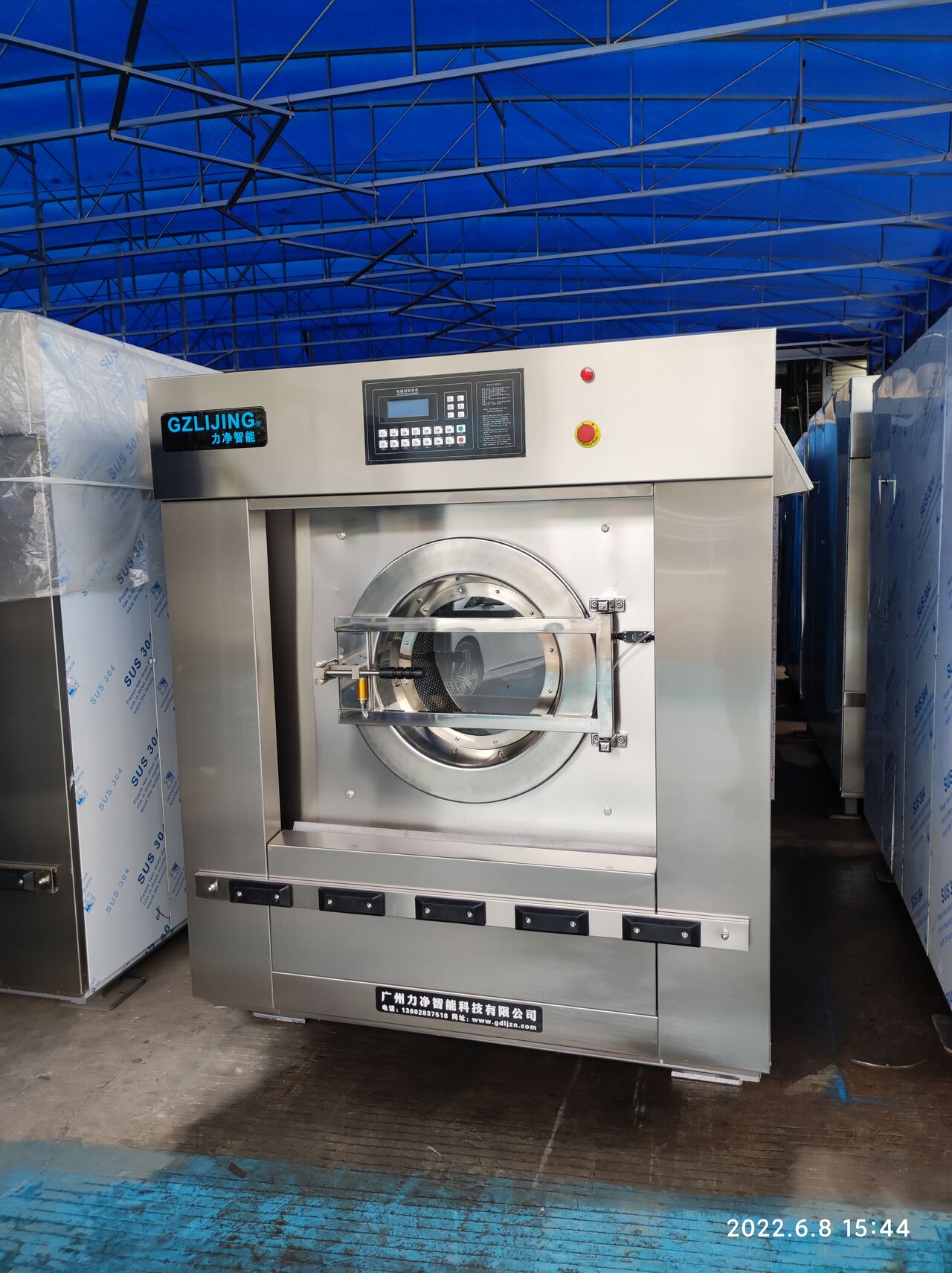
The most common and fatal pitfall is blindly chasing low prices. Many procurement managers fix their eyes on low-cost equipment right from the start, thinking "as long as it can wash, it’s fine," but they forget that core components like the inner tank and motor are the "heart and skeleton" of the equipment. Most of these low-cost machines use ordinary carbon steel or 201 stainless steel for the inner tank. Soaked in detergent for a long time, it will rust and corrode in no time, with a service life less than half of the industry average. The motor power is also insufficient; it overheats and shuts down easily under slightly high load operation, making maintenance workers almost permanent staff. The annual maintenance cost alone can account for 15%-20% of the total equipment price — isn’t that penny-wise and pound-foolish? When choosing equipment in 2026, my suggestion is to prioritize 304 food-grade stainless steel inner tanks, which are corrosion-resistant and wear-resistant, paired with high-power variable frequency motors. This way, the equipment can operate stably and continuously, and the cost of maintenance and replacement will naturally drop.
The issue of energy consumption and adaptability is also overlooked by many enterprises. Industrial washing machines are inherently energy and water guzzlers, with water and electricity consumption accounting for more than 30% of operational costs. Choosing the wrong model is equivalent to throwing money away every day. Interestingly enough, many small hotels obviously have a small daily laundry volume, yet they insist on choosing large industrial washing machines, resulting in "using a sledgehammer to crack a nut" and distressing waste of water and electricity. On the other hand, heavy-pollution industries like printing and dyeing, and coal mining choose ordinary equipment out of convenience; the washed clothes and fabrics fail to meet standards, so they have to be washed repeatedly, doubling energy consumption. How to choose the right one? It’s actually simple: select equipment with a suitable capacity based on your daily laundry volume and the type of fabrics you need to wash. If you can choose a model with variable frequency speed regulation and waste heat recovery system, water and electricity consumption can be reduced by more than 15% compared to conventional products — you’ll save a lot of money in the long run.
Don’t be fooled by the hype of "intelligence" and "multi-functionality; after-sales service is the real "peace of mind". Industrial washing machines are not small household appliances. Once they break down, a day of downtime may lead to linen backlogs and production delays — hospitals running out of disinfected clothes, laundry factories failing to deliver orders, the losses are not trivial. I’ve seen many enterprises that, because they chose brands with inadequate after-sales service, couldn’t get through to customer service when the equipment broke down, and maintenance workers arrived late. It’s common for some to lose thousands of yuan a day, and survey data confirms this: 72% of enterprises have suffered losses due to delayed after-sales response. When choosing equipment, be sure to ask clearly about after-sales guarantees. Prioritize brands with an extensive after-sales network that can provide 24/7 response. Services such as installation and commissioning, operation training, and lifelong spare parts supply should also be clearly stated in black and white — don’t argue after something goes wrong.
Environmental compliance is a hard indicator now, and there’s no room for ambiguity. With the advancement of the "dual carbon" goal, environmental supervision is becoming increasingly strict. If industrial washing machines fail to meet sewage discharge standards or have excessive detergent residues, enterprises will not only be fined but also suspended from production in severe cases. I’ve heard of an enterprise that was fined tens of thousands of yuan at once because its equipment had no environmental protection design and the sewage COD exceeded the standard, which also damaged its brand image — the gain is not worth the loss. When choosing equipment in 2026, you might as well pay more attention to environmental certifications. Prioritize models with residue-free drainage design; if they can realize wastewater recycling and precise detergent dosing, even better. It not only meets compliance requirements but also saves money on detergent — killing two birds with one stone.
Choosing the right industrial washing machine is never as simple as "buying a machine"; it’s a key step to help enterprises save costs and improve efficiency. Avoiding the 4 pitfalls mentioned above, achieving 30% cost savings through stable operation and energy conservation is really not difficult. In the 2026 industry trend of high efficiency and environmental protection, Guangdong Guangyi is a brand I quite recognize. This enterprise located in Nansha District, Guangzhou, has been deeply engaged in the industrial laundry equipment field for many years and doesn’t play tricks. Its products cover various categories such as fully suspended automatic washing machines and isolation washing machines, with 304 stainless steel inner tanks and variable frequency energy-saving technology. Whether it’s a hotel, hospital, or textile factory, you can find a suitable model. What’s more considerate is that they also provide one-stop services including pre-sales on-site survey, in-sales installation and commissioning, and 24/7 after-sales response — no need for enterprises to worry. It not only ensures stable operation of the equipment but also truly helps enterprises reduce costs and improve efficiency. When choosing an industrial washing machine in 2026, you might as well pay more attention to it.

+86 158-2025-1513

1744149454@qq.com

No. 2, Xinghai Road, Lanhe Town, Nansha District, Guangzhou, China

Product
News Center
Copyright
