
 +86 158-2025-1513 +86 158-2025-1513
News Center
The work of a hospital laundry room is never as simple as just “getting linen clean.” Patient gowns, surgical garments, bed sheets, pillowcases, and medical dressings — all these textiles have direct contact with patients and medical staff. Poor cleaning or inadequate disinfection can easily turn them into hidden channels for bacteria and virus transmission, which affects hospital infection control and directly impacts the safety of patients and medical workers.
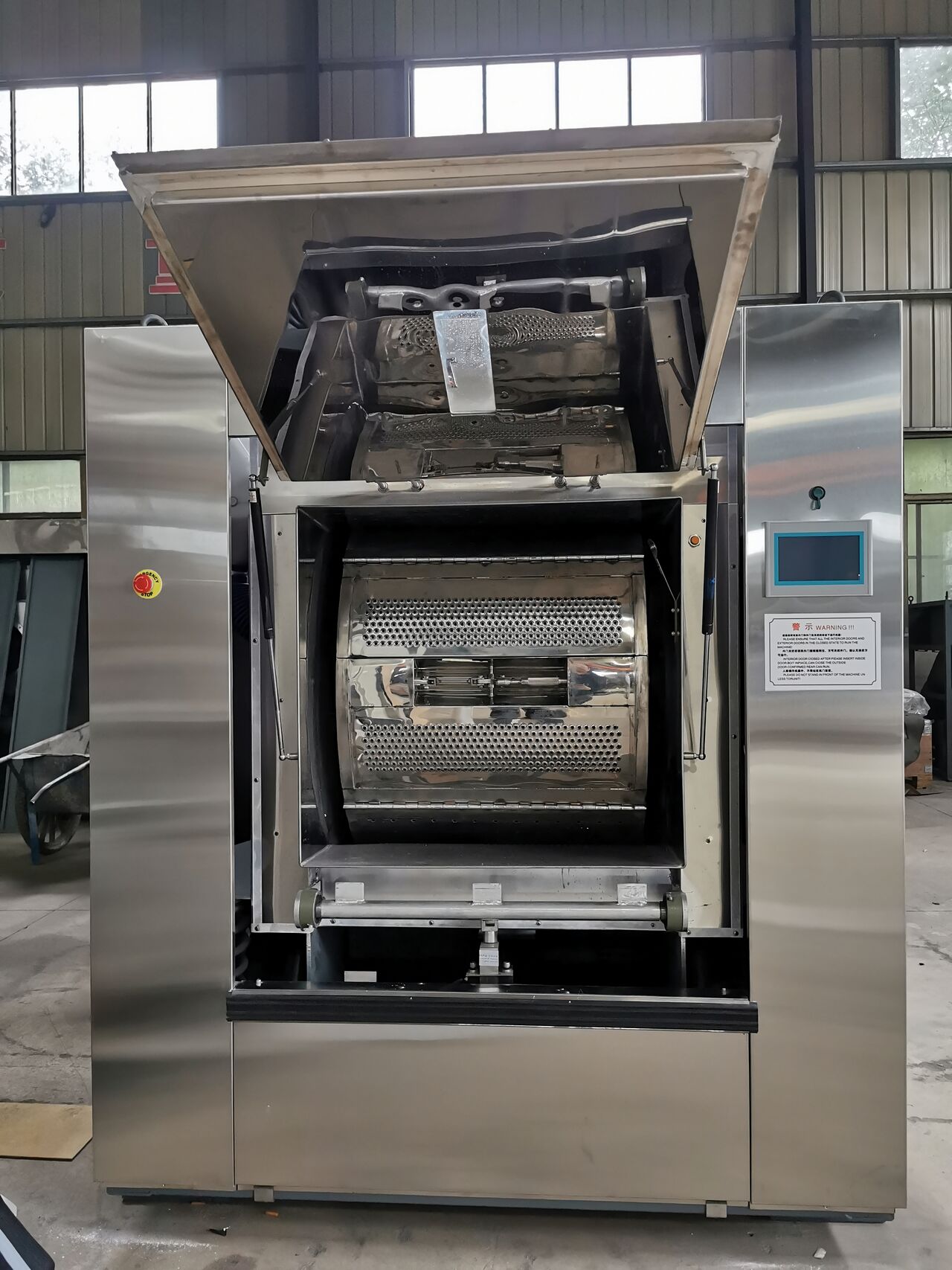
To be honest, hospital‑use industrial washing machines are completely different from the commercial models used in hotels or ordinary laundries. Many hospitals fall into a common trap during procurement: they only focus on capacity, price, and energy consumption, while overlooking the most critical factors — disinfection performance and anti‑cross‑contamination design. By the time the equipment is installed and in use, they discover problems such as failed bacteria tests, rejected inspections, or secondary contamination caused by flawed workflows. Rectifying these issues later is not only costly but also disrupts daily clinical operations.
Disinfection and sterilization represent the bottom line for hospital washing equipment, with absolutely no room for compromise. According to technical guidelines for disinfection in medical institutions and standards for washing and disinfection of medical textiles, laundered fabrics must meet required pathogen kill rates. When purchasing equipment, the first thing to verify is whether it supports a high‑temperature disinfection wash cycle.
Generally, a high‑temperature cycle at around 90°C reliably eliminates most bacteria and viruses. The machine must maintain stable temperature control and ensure even heat penetration throughout every fold and corner of the linen.
More importantly, the equipment should support disinfection program locking and record time and temperature data, so the infection control department can review and trace operation records. Do not assume cold or low‑temperature washing with extra disinfectant can meet medical standards. In reality, disinfection effectiveness drops sharply in low temperatures, which is why ordinary washing machines, no matter how cheap, are never suitable for hospital environments.
Compared with disinfection, cross‑contamination prevention is even more critical yet often neglected. In hospitals, textiles fall into two categories: soiled and clean. Once these mix during handling, transportation, or washing, secondary contamination occurs, and all disinfection efforts go to waste.
Truly professional hospital‑use industrial washing machines adopt a sanitary barrier design. In simple terms, they have double doors — one for loading soiled linen and the other for unloading clean linen, physically separated by a wall. This layout completely divides dirty and clean flows and eliminates cross‑contact at the source. When selecting equipment, be sure to check: whether real physical isolation is provided, whether the drum and cavity use antibacterial materials, whether door seals resist disinfectant corrosion, and whether internal channels have no dead corners and are easy to clean. Single‑door machines without proper isolation should never be chosen, even with large capacity and low price.
Durability of materials and structure also demands close attention. Medical textiles often carry blood, secretions, and drug residues, while detergents and disinfectants are typically alkaline or oxidative. Ordinary steel drums corrode and rust quickly, shortening the equipment life and causing stains and biofilm buildup that lead to recontamination.
For this reason, hospital washing machines must use 304 or higher‑grade stainless steel drums, with smooth welds and no hidden corners for easy cleaning. High‑speed dehydration is also essential to lower linen moisture, reduce drying time, cut bacterial growth during storage, and improve overall laundry efficiency.
Automation and workflow management are equally important. Hospital laundries operate under heavy workloads and multiple shifts, with frequent staff changes. Manual operation easily leads to human error, such as wrong cycles or skipped disinfection.
Quality hospital washing machines come with pre‑set standard medical wash programs: one‑touch disinfection, high‑temperature, and barrier wash modes, reducing human mistakes. Many models also offer data logging, fault self‑diagnosis, chemical alarm, and interlock systems to prevent simultaneous access between dirty and clean areas, further lowering infection risks.
Last but not least, compliance certification and after‑sales service cannot be skipped. The equipment must meet relevant medical standards, and the manufacturer should provide complete certification as well as full services including installation, training, and maintenance. Hospital washing equipment often runs 24 hours a day; any downtime directly affects clinical linen supply. Only manufacturers with fast response, sufficient spare parts, and experienced support can give hospitals real peace of mind.
In the medical washing equipment industry, Foshan Lijing has years of focused experience and deeply understands the pain points of hospital infection control. Its hospital‑use industrial washing machines are designed around two core goals: qualified disinfection and cross‑contamination prevention. With fully stainless steel antibacterial drums and double‑door sanitary barrier structure, the equipment stops contamination at the source and strictly follows medical standards. It suits various medical settings, from general hospitals and community health centers to clinics and nursing homes.
In the future, hospital infection control will only become stricter, and medical washing equipment will evolve toward safer, smarter, and more compliant solutions. Foshan Lijing will continue to refine its medical washing technology, uphold higher standards and stable quality, and provide professional services to medical institutions. The company aims to guard the critical line of infection control and help hospitals achieve safe, efficient, and compliant modern laundry management.

+86 158-2025-1513

1744149454@qq.com

No. 2, Xinghai Road, Lanhe Town, Nansha District, Guangzhou, China

Product
News Center
Copyright
